Let me start with mentioning that is a pleasure and an honor to be a co-writer on this blog.
We were chatting on the watercooler with the boys about “what is a good all-rounder set” ?
The question to me should have been rather , what do we even mean when we say “all-rounder” , “reference” ?!
For me, a good “all-rounder” is an IEM that plays any type of music at a high standard and doing this, it doesn’t need to be boring.
In my book, tuning and creating a good “all-rounder” that comes just shy of being the best at everything is not an easy job and I think it’s actually harder than creating a specialist set which shines in some particular aspects, but not in most or all.
The newest set I had the pleasure to own is Canpur CP752B. Canpur´s TOTL is a 14-driver configuration , 7-way crossover, multi kilobuck IEM which plays at the upper echelon of summit-fi with a masterful tuning and sound quality.
The model name, CP752B, refers to the driver config, which consists of 7BA drivers, 4EST + 1PMD drivers, and 2BCD drivers – follows a similar naming convention as Canpur´s other models: CP54E, CP74E, CP622B
Driver config and technical details:
Canpur seems to have a close collaboration with Sonion and is the first IEM to ever use their new G90 mid-high frequency BA drivers
- 2 BAs: Sonion 38D2XJ007Mi-8c
- 1 Knowles: 32873 (for bass)
- 2 Dual Sonion: G9ODA016/9 (for mids / highs)
- 2 Sonion: ESODTO005/D
- 4 ESTs: Sonion EST650B02
- 1 Planarmagnetic: CP-PM-015
- 2 BCDs: Sonion 37AAX007/A
- Further technical details on Canpur´s homepage
The packaging is quite impressive, though I’m less enthusiastic about the included cable. It is comfortable and ergonomic, but it falls short (only a little bit) in sound quality, and the 752B deserves something better to fully showcase what it’s capable of.
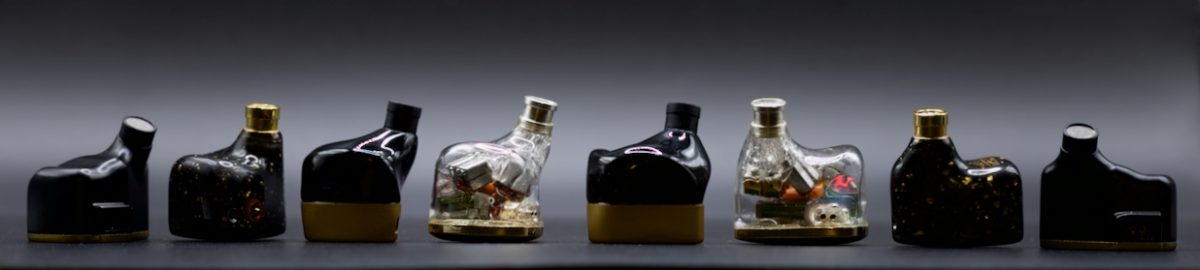
The shell design is rather understated, and the form factor feels slightly improved compared with Canpur’s previous TOTL model, the 622B.
Sound and a few notes about comparing CP752B with Storm and UM Pentara
Why Storm and UM Pentara?
They are direct peers in the ultra/summit-fi IEM category, priced roughly in the same price range with a complex multi-driver hybrid configuration , top of the line technical performance and a similar tuning philosophy.
The CP752B ranks among the very best all-rounder IEMs available today.
That doesn’t make it safe or boring, quite the opposite. It carries just the right amount of “color” to keep the listener engaged and focused.
The bass and especially the mids have a slight warm coloration that makes the presentation inviting rather than clinical. Although it is a highly technical set, it never forces you to dissect every note, instead it simply lets you sit back and enjoy the music.
The stage is probably the star of the show. While the 752B pours detail into your ears, its spatial presentation is what truly steals my heart. It places the music in a 3D, amphitheater-like venue with large, well-defined images and spectacular layering.
I would risk saying this is largely thanks to the BCD drivers, which, when implemented well, can work magic in creating a truly holographic stage.
Outside of Canpur, only a handful of brands manage this level of BCD performance. The two that come to mind are Mysticraft and Unique Melody (especially the Mason series from UM).
The bass was one of the pleasant surprises when I first tried the 752B in London a few weeks ago and outperformed basically all other sets I tried employing BA bass. It delivers a deeply textured sub-bass rumble paired with fast, punchy mid-bass. On Phil Collins’ “Another Day in Paradise”, the low end provides a solid, natural foundation, so convincing that it’s hard to believe you’re listening to BA drivers rather than a high-quality DD, even though the low end relies primarily on BAs (with the BCD also contributing to the mids and lows). Tt does an excellent job of replicating the natural texture and atmospheric reverb , fullness normally associated with good DD drivers.
Compared with the UM Pentara, the 2DD configuration produces a slightly more nimble, elastic, and organic bass – nothing outperforms DD imo , but things can get close and BAs have their own clear advantages.
The 752B is faster and leans more toward a technical presentation.
Switching to the Storm, bass presence is reduced just a little. Tactile and fast, but the mid-bass in particular becomes less “ever-present”.
The midrange is transparent and highly resolving, yet carries a gentle hint of warmth. Quite lovely, I have to add.
On Tarja Turunen’s “Anteroom of Death,” vocals come through impressively clear, articulate, and natural. The midrange and mid-bass area share the same warm coloration, giving the overall signature a subtle U-shaped (or perhaps V-shaped) tilt that remains inviting and engaging.
Mids sit slightly forward while the bass provides a stable “ground floor” beneath them.
Storm’s mids are a touch airier , placed deeper in the large stage presented by the GOAT , and slightly more recessed by comparison. The difference in spatial presentation isn’t huge, but it’s easily audible.
On David Gilmour’s “A Pocketful of Stones,” the Storm renders his voice with remarkable clarity and an enveloping quality.
Switching to the CP752B provides with a different experience: the stage contracts a little and the voice becomes less enveloping, yet warmer and more engaging.
It would not be an easy job choosing between the two when we are talking about vocals – one is warmer and engaging, the other presents voices better in space and has an edge in clarity.
752B’s treble is highly extended and airy, offering exceptional clarity and sparkle while remaining smooth at all times. From memory (I no longer have the 622B for a direct comparison), the 752B’s high end is smoother and carries slightly more body.
In comparison, the Pentara is airier, clearer, and more incisive.
Storm sits closer in tonality to the Pentara but elevates detail just a fraction further. All three sets are highly detailed and technical, yet the Storm extracts an extra tiny bit of information that can feel missing on the Pentara or CP752B. Cymbal edges, for instance, carry a little more air, like a subtle hue only visible through special glasses, which Storm equips the listener with.