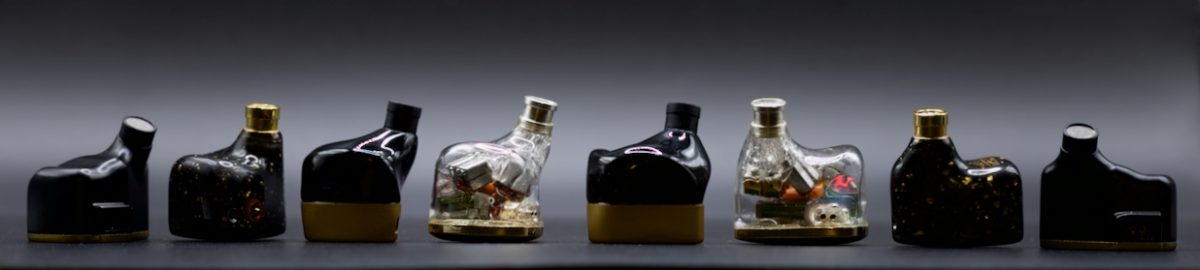
Midweek madness with Canpur CP752B –  “new blood” edition

Let me start with mentioning that is a pleasure and an honor to be a co-writer on this blog.

We were chatting on the watercooler with the boys about “what is a good all-rounder set” ?

The question to me should have been rather , what do we even mean when we say “all-rounder” , “reference” ?! 

For me, a good “all-rounder” is an IEM that plays any type of music at a high standard and doing this, it doesn’t need to be boring. 

In my book, tuning and creating a good “all-rounder” that comes just shy of being the best at everything is not an easy job and I think it’s actually harder than creating a specialist set which shines in some particular aspects, but not in most or all.

The newest set I had the pleasure to own is Canpur CP752B. Canpur´s TOTL is a 14-driver configuration , 7-way crossover, multi kilobuck IEM which plays at the upper echelon of summit-fi with a masterful tuning and sound quality.

The model name, CP752B, refers to the driver config, which consists of 7BA drivers, 4EST + 1PMD drivers, and 2BCD drivers – follows a similar naming convention as Canpur´s other models: CP54E, CP74E, CP622B 

Driver config and technical details:

Canpur seems to have a close collaboration with Sonion and is the first IEM to ever use their new G90 mid-high frequency BA drivers

  • 2 BAs: Sonion 38D2XJ007Mi-8c
  • 1 Knowles: 32873 (for bass)
  • 2 Dual Sonion: G9ODA016/9 (for mids / highs)
  • 2 Sonion: ESODTO005/D
  • 4 ESTs: Sonion EST650B02
  • 1 Planarmagnetic: CP-PM-015
  • 2 BCDs: Sonion 37AAX007/A
  • Further technical details on Canpur´s homepage

The packaging is quite impressive, though I’m less enthusiastic about the included cable. It is comfortable and ergonomic, but it falls short (only a little bit) in sound quality, and the 752B deserves something better to fully showcase what it’s capable of.  

The shell design is rather understated, and the form factor feels slightly improved compared with Canpur’s previous TOTL model, the 622B.

Sound and a few notes about comparing CP752B with Storm and UM Pentara

Why Storm and UM Pentara?

They are direct peers in the ultra/summit-fi IEM category, priced roughly in the same price range with a complex multi-driver hybrid configuration , top of the line technical performance and a similar tuning philosophy.

The CP752B ranks among the very best all-rounder IEMs available today. 

That doesn’t make it safe or boring, quite the opposite. It carries just the right amount of “color” to keep the listener engaged and focused. 

The bass and especially the mids have a slight warm coloration that makes the presentation inviting rather than clinical. Although it is a highly technical set, it never forces you to dissect every note, instead it simply lets you sit back and enjoy the music.

The stage is probably the star of the show. While the 752B pours detail into your ears, its spatial presentation is what truly steals my heart. It places the music in a 3D, amphitheater-like venue with large, well-defined images and spectacular layering. 

I would risk saying this is largely thanks to the BCD drivers, which, when implemented well, can work magic in creating a truly holographic stage. 

Outside of Canpur, only a handful of brands manage this level of BCD performance. The two that come to mind are Mysticraft and Unique Melody (especially the Mason series from UM).

The bass was one of the pleasant surprises when I first tried the 752B in London a few weeks ago and outperformed basically all other sets I tried employing BA bass. It delivers a deeply textured sub-bass rumble paired with fast, punchy mid-bass. On Phil Collins’ “Another Day in Paradise”, the low end provides a solid, natural foundation, so convincing that it’s hard to believe you’re listening to BA drivers rather than a high-quality DD, even though the low end relies primarily on BAs (with the BCD also contributing to the mids and lows). Tt does an excellent job of replicating the natural texture and atmospheric reverb , fullness normally associated with good DD drivers. 

Compared with the UM Pentara, the 2DD configuration produces a slightly more nimble, elastic, and organic bass – nothing outperforms DD imo , but things can get close and BAs have their own clear advantages.

The 752B is faster and leans more toward a technical presentation. 

Switching to the Storm, bass presence is reduced just a little. Tactile and fast, but the mid-bass in particular becomes less “ever-present”.

The midrange is transparent and highly resolving, yet carries a gentle hint of warmth. Quite lovely, I have to add.

On Tarja Turunen’s “Anteroom of Death,” vocals come through impressively clear, articulate, and natural. The midrange and mid-bass area share the same warm coloration, giving the overall signature a subtle U-shaped (or perhaps V-shaped) tilt that remains inviting and engaging. 

Mids sit slightly forward while the bass provides a stable “ground floor” beneath them.

Storm’s mids are a touch airier , placed deeper in the large stage presented by the GOAT , and slightly more recessed by comparison. The difference in spatial presentation isn’t huge, but it’s easily audible. 

On David Gilmour’s “A Pocketful of Stones,” the Storm renders his voice with remarkable clarity and an enveloping quality. 

Switching to the CP752B provides with a different experience: the stage contracts a little and the voice becomes less enveloping, yet warmer and more engaging.

It would not be an easy job choosing between the two when we are talking about vocals – one is warmer and engaging, the other presents voices better in space and has an edge in clarity.

752B’s treble is highly extended and airy, offering exceptional clarity and sparkle while remaining smooth at all times. From memory (I no longer have the 622B for a direct comparison), the 752B’s high end is smoother and carries slightly more body.

In comparison, the Pentara is airier, clearer, and more incisive. 

Storm sits closer in tonality to the Pentara but elevates detail just a fraction further. All three sets are highly detailed and technical, yet the Storm extracts an extra tiny bit of information that can feel missing on the Pentara or CP752B. Cymbal edges, for instance, carry a little more air, like a subtle hue only visible through special glasses, which Storm equips the listener with.

New toys Sunday #15 PMG APX ME

This unit has been lent to me by a fellow head-fi-er with no obligation whatsoever. It is the second time we temporarily swap gear.  

The technical specs listed on the PMG’s website are the following:

  • 12 drivers: 1x Rectangular Planar, 1x 10mm DD, 1x VCD, 8x BA, 1x Round Planar (all drivers are custom built to PMG Audio’s spec)
  • True 8-way passive crossover
  • Flat Impedance technology
  • SPL: 117dB @1kHz
  • Frequency response: 2Hz-22kHz
  • Titanium shell body
  • Custom 6N OCC pure Silver cable 4.4mm
  • Leather multi-function suitcase
  • Leather portable case
  • 5 pairs of PMG-selected ear tips
  • Certificate of authenticity
  • 3-year warranty

They are amazingly small and light, at 8,1g being lighter than some resin shells. Comfort, subjective as it is, was great for me. Any tips worked, with AET07 being my favourites, based on a combination of comfort and sound.

Sound

Let’s start with the most divisive point, treble. I have read some reports that they don’t have enough extension. What I hear is the opposite, there is more than enough extension, and enough air. Yes, it’s not the Annihilator ethereal, warm-ish, treble. What impressed me is the note weight in treble. Thick, meaty, Storm style. Cymbals are more contained than X, for example, where the attack is fast and the decay a bit longer. ME has the fast attack, but not quite that cutting edge, adrenaline infused of X. The decay is fast, shorter, for example, than X. An interesting effect is the cymbals seem to have their own resonance chamber, clearly delimited from the rest of instruments.

 
Upper mids are elevated, to the point of being very close to the top of my comfort edge. This is a set I cannot listen to at high volume for. along time. Luckily, there’s no need to, either, for ME sounds good and detailed even at low volume. Highly energetic upper mids means all guitar solos are highlighted in a quite obvious fashion, giving the impression the pedal board is cabled directly into your brain. I don’t mind taking a short break from time to time, for that lively sound. 
The only niggle I have with the mids is a slight upwards skewing of the sound. Some voices (particularly male) appear to be just a touch higher than on some other sets, or let’s say that I’m used to hearing them. This could be an effect of the forward voices, but it is something I did not hear with Epic Apocalypse, Storm, Tet or X. I’m sure it’s just the result of some rogue frequencies inducing this kind of response in my ears, but I thought it is worth mentioning, in the off chance someone else might have had similar issues. 
For the rest of the mid range, everything is how I like it. The lower mids carry a lot of weight, the distorted guitars sound relatively dirty, without affecting the neighbouring frequencies, the attack is lightning fast and the resolution is right up there with Tet and Hex. Male vocals, and in particular the death growling have a nice warm-ish weight added to them, making this set very good for such genres. 


Bass is the highlight of APX ME, on that I agree with other reports. I could write pages of gushing about PMX’s bass, but frankly, it has to be experienced first hand. It’s not the amount, but the quality thereof that makes the difference. Perfectly textured, articulated, with a clear emphasis on sub bass and a mid bass that is probably the most detailed I have heard to date. The richness of texture and tone is unparalleled, to my ears. At the same time, the bass is so fast and accurate that is not overpowering the rest of the frequencies, despite some rare bleeding into the mids.  

 Stock cable was my favourite, first for comfort, secondly for sound. Details retrieval with cable is very high, separation natural, treble confined to its designated space and the balance sub to mid bass is perfect. However, it has the most elevated upper mids, to my ears. 


Equiped with Vesper Shielded, the sub bass takes a small bump, but the stage is larger and taller, so it has more room to fill, the end effect being an overall improvement. Normally, adding more of one frequency, masks another, but Vesper has this great property of helping the IEMs distribute sound more evenly. 
The upper mids are less harsh to my ears, and the treble has that organic, edgy copper sound. A bit more shimmery, but a tad thinner.  
Comfort takes a small hit, but remains perfectly manageable.  
 

With SS4W the stage is widened, but the height is not proportionally increased,  so for me, it upsets the balance a bit. A matter of habit, I suppose. The sound density remains high, with each part of the stage full with sound, but maintaining ME’s natural separation. There is a touch more sub bass, but I haven’t noticed any improvement with regard to upper mids and/or treble.  
I wear spectacles and I have an unexpected problem with SS4W, it rubs against the spectacles arms and generates audible vibrations (ringing) in the shells. 

 
Comparisons  
Storm. I’ll start by saying that straight after ME, Storm sounds muffled and lacking details. I know, of course, it’s not the case, but this is the sort of change ME induces in my brain. Obviously, Storm has a larger stage, the bass is more fluid, the upper mids less elevated and the treble more forward.  
 
In terms of details, ME is more detailed than Storm on bass, slightly more detailed in mids, and less detailed in treble, with a presentation closer to the highly holographic Tet than the reference Storm. The attack on guitars is fast, each note is spectacularly detailed, something I first heard with Tet, then with Epic Audio Apocalypse. Triplets have a spectacular way of sounding, making listening to Raining Blood a real pleasure. Storm still takes extra points for treble (a perfect dosage of timbre, intensity and body, all at once). 
The biggest difference remains the overall presentation,  with ME a bit darker, with its slightly coloured upper mids,  while Storm is the very definition of neutrality.  
 
Elysian X 
Sounds hollow after ME. Given enough adaptation time, the bass on X is less detailed but a touch more natural. Why do I say that?  Because, in real life, it is rare to hear that level of details in bass. Except when listening in isolation. I’m not saying it’s a fault from ME’s part, simply that I am not used to that level of details and I am not (yet) sure if this is a direction I want to pursue further.  
While not having the dirty lower mids of APX SE (from memory), Pentara or Epic Intoxication, X still has some of the best sound for metal. The combination of roughness in the lower mids, buzzing in the upper ones, makes it an ultimate metal machine. The upper mids liveliness is reminding me of ME. Treble is more forward, with a more edgy presentation and more shimmer.  
 
Listening to 2PAC’s “Can’t C Me” is a bit hot up top, but still perfectly listenable. Nicely textured bass, this album being one of the rap masterpieces, from the instrumentation point of view. Impressive control of sibilance from the part of ME. I know the song inside out, but the bass presentation is new.  
 
Amon Amarth’s “Find a way or make one” is a very good test for grit and balance. 
 The roughness in the lower mids, from where that granular sound stems, could have been upped a notch. The voice, on the other hand carries enough granularity, making it a compelling listen.  
 
Despite finding the upper mids borderline uncomfortable in the beginning, I started missing them when listening with other IEMs, so I kept returning to ME. After a couple of days I got so used to ME, that the upper mids harshness completely disappeared.

New toys Sunday #14 – ZhuanXu

The law of diminishing returns

ZhuanXu and its stock cable

After the stratospheric sets of the last weeks, it’s time for a reality check, with a set that retails for almost 600USD and comes with a portable amp, see here.

My version came with a dongle, the Venture Devastator Pro Max, which breaks through to over 3.1V RMS. Yes, it can drive Storm and not sound thin.

The ZhuanXu features 2 balanced armature drivers, an 11mm custom beryllium-coated dynamic driver and 2 planar magnetic drivers. The resin shells are on the large side, but comfortable, good looking and they have a metal nozzle protected with a metal mesh. Flawless execution from my point of view.

The tuning is a rather balanced one, with a slight bass boost, but tastefully done, not overpowering any other frequencies. Throughout genres, ZX offers a neutral presentation without any obvious coloration, with good notes weight and decent degree of instrument separation.

The bass is striking with its perfectly judged balance between mid and sub bass. I listen to a lot of metal, so mid bass is critical for my enjoyment. ZX provides enough mid bass to make the bass guitar clearly distinct, but it never steals the focus. Sub bass is somehow restrained, with modest rumble, but vast openness, this particular interplay of mid bass/sub bass delivering one of the most natural sounds I have heard in an IEM.

Mids are forward and transparent, getting out of the way of music, leaving me enjoy the sound without worrying about what’s inside, details, or any other distractions. The note weight is decent, but I would not call it stellar. In the lower mids, I would have liked a bit more roughness, to help distorted guitars sound more gritty. The voices, both male and female, continue on the naturalness line, devoid of any added warmth, any extra clarity sauce, just what you’d expect from Florence and the Machines or Boz Scaggs. I must admit, this is a ballsy approach as, I imagine, some people might be put off by this “naked” presentation. Upper mids have a bit of a boost, such that some guitar solos have plenty of bite, but they are not shouty.

Treble is maybe the most uneventful part of the spectrum, with roll-off starting well before 15KHz. The air is good, probably class leading in its price range, but not comparable with treble monsters like Anni 23, X, Pentara, etc. The treble is a bit closed in, tonally wise. Not a deal breaker, but it is clear this isn’t a treble-head set.

The stage, as expected for this price range, it has good width, decent height, but minimum depth. The instrument separation follows the same line, it is decent, but nothing I’d write home about.

The quick conclusion is that ZX is a set not meant to impress from the get-go. Rather than that, it tends to grow on me and wow me with its natural, uncoloured way of presenting music.

New toys Sunday #9 – FlipEars Arion and Faith Audio E1000

I had a chance to audition these two beauties thanks to a tour organized by Elise Audio over Head-Fi.

Starting with Arion, it is an upgrade of the Legion in every conceivable way. 

The bass is, as expected, powerful, with deep extension and a prolonged rumble, but, compared to Legion, it is significantly faster, fast double bass drums not being an issue anymore. A bit of bass bleeding into the mids is unavoidable, but it is, in most cases, not hindering the enjoyment.

Mids are smooth, to the point where I wished they had more grittiness. They are pretty uncoloured, despite their noisy neighbour. The voices are centrally placed, but slightly remote. Also, do not expect the same kind of clarity as Fei Wan or the Faith Audio E1000. For complex music, the voices have a hard time cutting through the mix, the weight of the bass drawing my attention away from them. However, with less congested music, like Gretel’s squish album, Arion’s character is very different, the music sounding light like a summer breeze, with the voice up and front, floating above the instruments. In rare occasions, the bass makes its presence felt too much, though, even here.

The cymbals are located at the periphery of the soundstage, much like Legion before, but unlike Legion, this time there are a lot of elements in the immediate vicinity (I felt the stage was hollow with Legion). As for the treble sound, is a more contained one, with limited spatial spread and rather thin and delicate sounding cymbals. The extension is good, there is ample headroom over the cymbals, but the sizzle is more appropriate for dance/pop than metal. In terms of details, I’d say they take a relaxed approach, not throwing details at you, but not giving the impression something is missing either.

In terms of stage, it is very impressive. Not only it is large and tall, but there is good sound density throughout. No hollowness here.

Some peculiarities: as soon as you put them in your ears, you start feeling a subtle vibration, like a very, very faint ringing, no doubt an effect of the BCD contained therein. Also linked to this, when the cable is rubbing against your clothes, there is the same sensation, that something is vibrating. 

The stock cable (made by Eletech) is very nice, soft, with no microphonics and colour matching the shells.

They need a clean, analytical or reference source, like the AK SP3000 or the Nipo N2 (despite its tendency to accentuate sub bass a tad). With MUB5, despite adding body in the mids, the treble is less detailed than I like and the bass pummelling is getting too much after one hour.

In terms of music, they can do quite well with metal, despite not being my no.1 choice for this genre. Slow jazz is very good with Arion, with natural voices, lively trumpets and an ample bass acting like an anchor. Film music is the perfect match, the OST of Hostiles or Boba Fett sounding cinematic, large, impressive, with so many different layers. Rap is another good choice and so is EDM.
In conclusion, a very accomplished set, that takes the Legion heritage and adds more precision, resulting in a greatly improved IEM. I guess its main competition is the Ice Labs Spectrumica.

Faith Audio E1000

If you take everything I said about Arion and turn it 180°, you have the E1000.
Short version: light, nimble bass, reference mids with an emphasis on upper region and sparkly, sizzling treble. 
Long version: 
the E1000 has one of the most natural bass reproduction I have heard in an IEM. It is very light handed, to the point of me wishing it had a bit more energy. The extension is not lacking, but the sub bass is so polite, if you blink you might miss it.
For reference: I usually complain about the bass being too much, or too slow or overwhelming, muddying the mids or any number of things, but I rarely complain about it not being enough. To make things clear, it is not a complaint in this case, more like a wish for that extra 1%.

If the sub bass keeps a low profile, starting with mid bass, the picture couldn’t be more different. E1000 has a well articulated, textured mid bass, with abundant details. Those details are not just thrown at you, but layered like a cake. Such a layering is no surprise in a multi- hybrid IEM, but in a single DD? Colour me impressed. Moving further, the lower mids are equally detailed, textured and uncoloured. There is enough grit for metal, which combined with the super fast bass, turns E1000 into a mean machine for the genre. The only negative is a perceived lack of body in the lower mids. While the edginess is there, I would have liked a bit more note weight. The same trend is present for upper mids.
The practical importance of these, is that while the timbre is spot on, in some occasions, the voices sound too ethereal, missing some core weight (imagine the difference between a ball that is filled with matter and another, made of the same material, with a hollow core, or a lower density filling in the core. They will look the same, feel somehow similar but the difference between them will still be noticeable. 
Some sibilance is present, but nothing dramatic. It seemed to be amplified by wide bore tips (Eletech Baroque). Narrow bore tips were almost a must for me. 
The treble is fantastic. Details, extension, body, layering, sizzle and body, everything is just right. It’s lively and organic, making this treble head very happy. 

Great clarity throughout the spectrum. 

The stage is reasonable large, with some height, but not a lot of depth. I’d say the IE900′ stage has a bit more width, but it is more shallow than E1000. Quite normal for a single DD to not have that much depth. The imaging is much better than expected from a single DD.

The stock cable is thick and unwieldy. A far cry from the Flipears’s effort. Sonically, it doesn’t do E1000 any favours either, as it tends to amplify the slight lack of body and add some harshness in the upper mids. I had much better results with the Quad Copper, Ulan 8w and Eletech’s 5th Ode, cables that tamed the upper mids and brought in a bit of weight in the lower frequencies. Other cables took it in the opposite direction, Apollo GT increasing the detail retrieval but making it quite shrill. Hansound Nyx brought more hollowness, so a clear no-go for me.
The biggest minus of the E1000 is the comfort, due to its particular shell shape and short-ish nozzles.

E1000 benefits greatly from a warm source, something like tubes (Apos Gremlin was used) or R2R, where the reasonable priced Fiio M33 did a great job. MUB5 was good, but not great, while Nipo N2 seemed to “correct” the bass, and put a flashlight on the voices. Of course, there is an immediate fix to the few E1000’s shortcomings, in the form of the Audma Brioso. With a simple twist of a knob, a tasteful bass shelf is added, without detectable impact on the mids. Furthermore, activating the Elisa circuitry (let’s call it simplistically, a form of cross-feeding), adds all the fullness and body I was needing. Frankly, once you hear it with Elisa on, it is hard to get back to normal sources. The drawback, apart from the prohibitive price, is a los of stage width upon activating Elisa, but more than compensated for by the extra thickness. 

Where does it excel? The sound is one of the most natural and most pure I have heard to date. The level of details, and even more so, the way they are presented is downright impressive. It is enough to focus on one part and look closely at the layers, decorticating them one by one, to realise the amount of effort that went into the E1000. While I tend not to prefer one technology over another, I must admit, the single DD IEMs sound more natural than anything. 

E1000 is good for bass light music, such as rock, metal, progressive, indie and many others. I cannot imagine it being the best for EDM, though. Or any other kind of bass heavy music. Rap, hip-hop lovers might also feel this set is lacking in pure extension.

For jazz, the answer is more nuanced. Depending on the artist, male or female, and the type of accompaniment, it can be either brilliant or slightly thin. The interplay bass – drums, with snares vibrating very clearly is very nice. I spent hours listening to slow-ish jazz, the emphasis on voices making E1000 a great contender to enter my collection.

The natural competition is the TXN Diamond, another Ti shells single DD, that has even more energy in the upper mids, but was easily tamed by using the Ulan 8w cable. It is significantly cheaper and more ergonomic. I wish I had them both at the same time, as I cannot reliably compare them based on memories. 

The other alternative is the DIta Ventura, significantly more expensive, with an equally stubborn cable. The differences in sound are more marked, with Ventura having a more buttery, warm sound, with less treble energy and more note weight. 

From these two, my preference goes, without a doubt to E1000, despite it needing another cable and careful source pairing.

New toys Sunday #8 – Aroma Fei Wan

Aroma Fei Wan is a high-performance hybrid IEM (2DD, 10BA) that prioritizes extreme clarity, cinematic dynamism, and a sophisticated “bouncy” bass response. Sharing its ergonomic shell design with the Aroma Jewel and NGaudio classics Khaos and Erebus, it offers a comfortable fit paired with a sound signature that leans toward a balanced W-shaped profile.

Sound Profile

  • Bass: The standout feature is a powerful, elastic sub-bass that provides a “cinematic presence” and subtle liveliness. While the sub-bass is massive and well-controlled, it slightly veils the mid-bass, which—though fast and articulated—lacks the ultimate fine detail found in NGaudio Erebus.
  • Mids: Generally uncolored, with lower mids forward and the upper mids slightly recessed. Fei Wan creates a deep sense of space but can leave me wanting more steam in the lower-midrange instruments. While voices have good body and clarity, they can occasionally struggle to cut through congested passages in complex productions. However, for jazz and instrumentals, the mids feel perfectly placed.
  • Treble: Energetic and airy with a fast attack. It lacks the lingering shimmer of EST drivers, resulting in a “biting” character. This high initial energy can lead to occasional harshness or sibilance in specific tracks (e.g., acoustic guitar in Metallica’s fade to black or Dream Theater’s cover of Perfect Strangers), which may cause fatigue for some, though it remains highly detailed.
  • Technicalities: The soundstage is impressively wide and deep, with decent vertical height. Layering and instrument separation are “top-notch,” maintaining composure even during highly congested musical passages.

Synergy and Comparisons

The Feiwan is easy to drive and benefits from warmer, “analog” sources like the Nipo N2 or Audma Brioso to round out its energetic treble. Cable rolling is effective; the Eletech 5th Ode adds lushness and note thickness, while the Nightcraft Spectre tames harshness while maintaining air. The stock cable is good enough, though.

CompetitorComparison to Feiwan
Traillii JPMore “soul” in the bass and superior vocals, but lacks Feiwan’s extreme clarity.
Cadenza 12More balanced and cohesive treble, but feels dull and lacks the Feiwan’s “sparkle of life.”
NGaudio ErebusVery similar tuning, but smoother and more lush; the Feiwan is cleaner and airier.

It’s not the first I hear the Fei Wan, but the first time I get to dive deep into its immersive sound.

NGaudio Erebus (L) and Aroma Fei Wan (R)

New toys Sunday #5

And I’m back, with a legendary IEM, the Aroma Jewel. A 13 drivers tribrid (1DD, 6BAs, 6ESTs), Aroma is tuned rather neutral, with a balanced presentation and. very good layering.

Aroma Jewel paired with Eletech’s 5th Ode cable

While it may seem as an evolution of the famous Oriolus Traillii, with a FR graph the sound is, in fact, quite different. If Traillii has a large stage, with emphasis on integration and not separation, Jewel goes in the opposite direction. Its stage is narrower, but it expands vertically and in-depth. The layering is very good, as revealed when listening to busy pieces, like Akrona’s La Cenè album, including both a metal band and an orchestra. Jewel is very good at layering these two elements.

By comparison with Traillii, the sound is more forceful, with a more aggressive pinna gain, bringing the voices forward. Because of the elevated upper mids, Jewel sounds more V shaped than Traillii.

The sibilance is very well controlled, making listening to 2Pac’s “All eyez on me” a real pleasure (on many IEMs, the entire album has quite piercing treble and significant sibilance).

While Traillii remains the master of vocals, Jewel has a more visceral bass and improved layering.

The full review is posted here.

New toys Sunday #4

Another legendary IEM….the Elysian Acoustics Labs Annihilator, 2023 Edition.

Often named the “King of treble”, can it leave up to its reputation?!

Currently undergoing a comparative test alongside its brother, X, and the NGaudio Erebus, Anni 23 has a muscular mid bass and incredibly airy treble, that impresses with energy and control. I can already say its status is well deserved, even before concluding the test.

Update: Full review here.

A simple, yet effective design

Craft Ears Omnium and Craft Ears Omnium Ti

Omnium OG is an old acquaintance of mine, an IEM I have tested and nearly bought before, and heard a couple more times along my voyage to my current line-up. It was too voice forward and a tad bright for me in the past, but my preferences shifted a bit and now it falls right in the middle. I have also heard Ti a couple of times before, once in Munich, at High-End and once at CJL.  

I listened to them in parallel, on a Nipo N2 or the Audma Brioso. Both need some grunts and either of these devices has plenty of reserve. 

Main differences
FeatureCraft Ears Omnium (Standard)Craft Ears x Elise Audio Omnium Ti
Shell/Faceplate Material3D-printed resin shell with 18k gold-plated mirror-like finish faceplates and a Carbon Fiber insert.Newly designed, more ergonomic shell with CNC Titanium finish faceplates and a Brazilian Lacewood insert.
Acoustic DesignStandard 3D-printed shell design.Features a newly designed, more ergonomic shell.
Stock CableCustom-Made Detachable 2-pin Cable (typically high quality silver-plated OCC copper).Custom-Made Palantir Premium Cable (Double shielded gold-plated silver + silver + silver copper alloy).
Included AccessoriesStandard accessories (hardcase, dehumidifier, cleaning tool).Includes an Impedance Adapter (specifically with the Launch Edition) in addition to standard accessories.
Sound SignatureDescribed as expansive, with a tonal mix of slight warmth and slight brightness, and a neutral-to-natural midrange. (Features True Load™ technology).Described as a new tuning iteration with the “flavours and preferences of UK,” designed to be more “punchy, detailed and expansive,” and to “hit a little harder.”
Driver ConfigurationTri-brid (1 DD + 1 Planar + 5 BA) – Total 7 DriversTri-brid (1 DD + 1 Planar + 5 BA) – Total 7 Drivers
Impedance12Ω (± 0.8Ω 10Hz-20kHz)Specification not explicitly listed in all descriptions, but I assume it remains similar to Omnium OG
Frequency Response8Hz – 40kHz8Hz – 40kHz

The songs I have chosen are: 

 Lingua Ignota – Persefone, it is a very immersive and engaging song,  the particularity thereof being a very gritty sound, with most of the stuff happening in mid-bass and lower mids. If the IEM has too much of a dip in the mids, it will sound incoherent and disconnected, the sub-bass receives a bit of the gritty character, while the treble is singled out and becomes distracting.  

How I like it to  sound, drums thundering, with a clear difference in decay between snare and toms (fills). The guitar gritty and bassy  (a good, fast bass, like Storm’s does wonders here). The treble has to be a bit subdued for it to work best.  One IEM that makes this song enjoyable is the Asteria.  

How do the Omniums fare: OG sounds clear and sharp, there is some nicely controlled subbass, but the bridge between that and the mids is a bit too depressed to get the most out of this song. The treble sounds fantastic and clear, with good timbre and good energy and air. There is plenty of textures in the highs and mids. 

The Ti is hardly reminescent of OG. It sounds more forceful, with the mids-bass sounding exactly how I was hoping it would; the bass guitar is easy to follow, without dominating the scene (I have used rather skinny, wider bore tips).  The treble is more depressed than OG, but no problems, there is still plenty of air and energy. The details appear a bit masked compared to OG, but what is lost in highs is more than gained in mid-bass. 

The place where I belong – Riverside Here I am looking for clarity and immersive sound. This is good for checking the upper mids balance, as there is no need for gritt here. There’s a nice bass line that I like to focus on until the keyboard starts.  

Ti plays safe, ample bass, with the balance tipped more towards sub-bass, that is constantly in action. The voice is clear and occupies its own space, just like the rest of the instruments.  

OG is more voice forward, clearer and brighter. Funny enough, I’d say there are more details in the upper mids. When alternating between them, OG sounds more competent, while the Ti is the warmer, easier to listen-to, somehow safer option nowadays. The voice and bass control elevate OG over Ti for this song. The organ sounds more spatial and the layering is closer to my taste.  

Approaching Babel – Orgone. The cymbal work is exquisite, just like the bass. It’s all about details here, no need for extra oopmh i the bass.  OG does well until things get loud, then it feels a tad crowded and it borders on strident to me. Nice interplay bass-cymbals, though. It doesn’t cross the line, it remains on the safe side, but is maybe not my first choice for this title. 

Ti has a sweet warmth, it almost feels like different music. The bass guitar is Omnipresent (got it?!) . It still feels less detailed than OG, but oh, so addictive. I am happy to trade some details for a graver sound. 

WIndow pane – Opeth  Started off with Ti. What I look for here is basically maintaining the atmosphere, the nostalgia, the contrast between Mikael’s soothing voice and the seriousness of the lyrics. Disembodied loneliness…Not only Ti, Both Omniums are good for this slow homage to 70’s prog music. The drum part is genious, is the one setting the tone for this melancholic music, while at the same time the hi-hat is what draws back into the light. A course in controlled melancholy. With it’s more correct, more detailed approach, OG is chipping away at the blackness of this song. Not in a negative way, it’s just that it  easier to stay in the spirit with Ti. It depends on my mood, and the time of day, for an evening, Ti is soothing and relaxing. For a morning, OG does the trick. 

What New York couples fight about – Morcheeba I am looking for the layering of the voices, the space between one another and the distance to the accompanying music. I particularly like the focus of OG on the main voices and the way the background voices are portrayed while maintaining  nice stereo effects and leaving enough space for the chorus, when the music is fuller, but filling a space that did not seem empty before. Tbh, OG is simply perfect for this music. 

Ti keeps some of the voice forwardness, but not the whole of it. I’m not sure the extra bass brings anything here. It’s still very good, but I prefer OG for this one. 

All Eyez on me – 2Pac. Unfair fight, this version of the song (from Qobuz) is produced with too much treble and a touch of sibilance. As expected, no problems for Ti. No sibilance, no harsh treble. Just goodness. I think Ti is one of the best IEMs I have heard this piece with. Also unsurprisingly, OG cannot quite rise to the occasion. Afterall, Ti has set the bar very high. The difference is less than I imagined, there is still enough warmth, enough details in the bass, the voices are, as before, clear and the sibilance is so well controlled. The OG remains a very good IEM. 

The conclusion of this week with the two Omniums is that Omnium OG remains a shockingly good IEM, very resolving and with impressive layering, while putting the main voice closer to the listener. Intimate voice, but wide stage. The mid-bass and sub-bass are a bit on the lean side. 

The body of 7th Acoustics Asteria is very similar to that of Omnium, but much deeper, to accommodate all those drivers

Ti is addressing the mid- and sub-bass, but it does so while reducing the treble and taking the voices half a step back (spatially). It is a safer play, with less peaks and it sounds less resolving. Now, this could be just a side effect of decreased treble energy or a deliberate choice from their maker (trends come and go and very resolving IEMs gave way to bassy monsters). Ti can be quite polite, with wide bore tips, maybe a shallower insertion (like Baroque, Divinus WB), but it can become teeth rattling with tips like the CP145 or Finals. 

Most of my music is dark and depressing, so Ti is probably a better match for it. One thing I am sure of, you can’t go wrong with either of them.  

Omnium and Omnium Ti are available from Elise audio.