Midweek madness

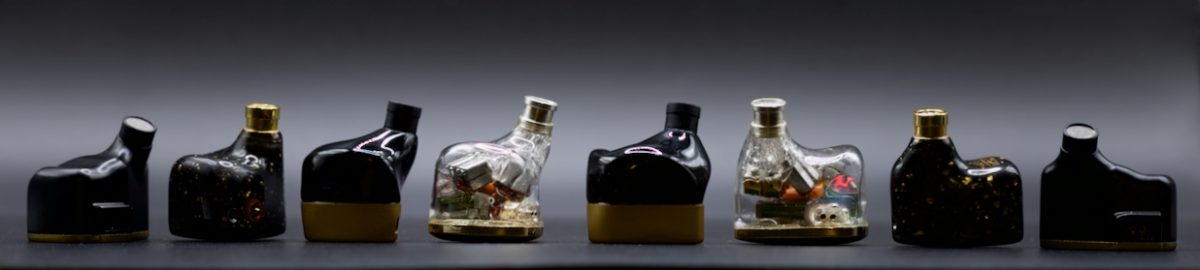
I have seen a lot of crazy things in this hobby, but the Cross Lambda Apollo GT might be one of the most outlandish cables I came across.

From the choice of materials to the shielding, everything screams quality. The conductors inside contain Palladium plated Silver, Silver plated Copper, Copper hybrid, with a full braided OFC Copper shielding; the 4,4mm jack is made by Furutech and on the IEM side, Eletech’s Versa offer versatility.

This is not a cable that surprises you. It doesn’t bring a night vs day difference, what is does instead is to make the background really quiet, leaving more room for music. With V shape tuned IEMs, it brings more balance, allowing the voices to sound a bit closer. The bass and treble are prima facie unaffected, bar a subtle improvement of the articulation and note thickness. The biggest plus is an extra layer of coherence. I didn’t know a cable can help integrate the various parts of the spectrum into a more harmonious whole.

Ergonomically, it is one of the softest cables, especially when taking into account the shielding.

New toys Sunday #11 – Epic Audio Intoxication

The Epic Audio brand is almost unknown in the West, but it is a popular brand in Asia, where they have released a number of products which are quite appreciated.

The Epic Audio Intoxication has an impressive driver count, with 12 BA + 1 PBA + 8 EST+ 2 BCD. The shells are made of titanium, with a hammered aspect, rough and sturdy.

The sound is, at a first glance, a mild V, but upon more listening, the voices are quite forward, so a W shape would be a more appropriate description.

The sub bass is rolled off, while the mid bass is allowed to stand proud and tall, the end result being an approach that emphasises texture and articulation over low frequency rumble. In a manner similar to some Noble products, the low frequencies are very dense and pretty forward. Does it chug? Yes, it does, with a mean, thick sound that works wonderfully for downtuned distorted guitars. The passage between low and high frequencies is swift and harmonious. The upper mids remain uncoloured and smooth and the treble is nicely layered, with splashes pushed towards the back of the stage, but the rides crystalline and loud enough for this treble head. Overall, the treble is smooth and easy to listen to, with good sustain and note thickness.

The stage is large, but more importantly it is very full. Everywhere you focus your attention, there are multiple things happening at the same time. That is not to say that it is missing air, but it is noticeably going in the opposite direction than some of the popular modern IEMs (Arion, Legion, Spectrumica or even Mentor). The layering is good, logical and coherent. But the main feature remains the “wall-of-sound”.

New toys Sunday (catch up edition) #10 – Vortex Reference

With 2DD+2passive MEMS, they create a large stage, with the sound extending well into all three dimensions. The layering is particularly impressive and the L/R imaging is one of the best I have heard.

Bassy by nature, they benefit from a fast driver, making them my second bassiest IEM that works for metal (Pentara has even more sub bass). They manage to hide the strong bass until is needed, the only give away being some floor toms that have a powerful hit and good resonance. It is one of the most natural reproduction of drums. Mid bass continues on this trend, being muscular and articulated, with decent texture, quite detailed and never feeling too much or smearing the mids.

Lower mids are markedly depressed, bringing a very interesting separation between the lows and highs. It may sound strange when you read about it, but in real life it sounds very interesting. The first effect is an amazing clarity. The second, a bit of thinness in the lower mids, leading to acts like Amon Amarth sounding a bit lighter than I am used to. Upper mids add some extra energy, so the voices are not remote. Also, the guitar tones are very lively, and they have good bite.

The treble is unapologetic, lively, energetic, with good sizzle and sparkling. With its large stage, there is plenty of air surrounding the cymbals, but the stage never feels empty or hollow. The sound is crystal clear, with a good sense of realism.

Overall, a very detailed set, maybe playing more on its excellent separation rather than adding details that were not present with other sets. Everything has more space to unfold, giving you time to register all the nuances.

Midweek madness

As if Unique Melody Mason Asahi was not crazy enough, the enigmatic Cross Lambda Apollo GT is here to take things one step further. In fairness, Asahi’s stock cable is already extraordinary and it remains one of the best, if not THE best pairing for it.

UM Mason Asahi with the stock cable, UM Fantasy

The CL eases off the dominant bass and adds a bit of air up top. A hint of definition is added to all parts of the spectrum, but it comes with a touch of sibilance. The stage remains large and tall, with more depth than stock cable. The voices execute a more delicate ballet, coming forward a bit and are… unveiled, compared to stock cable. In other words, the Apollo GT improves and highlights technicalities. However, does Asahi need more technicalities? One of their best attributes, for me, is exactly that slightly mysterious air, lush, almost lascivious.

In the end, what CL brings to the table is another flavour of Asahi. If you didn’t like Asahi with stock cable, this cable won’t change your mind. If you did, this cable won’t change your mind.

New toys Sunday #9 – FlipEars Arion and Faith Audio E1000

I had a chance to audition these two beauties thanks to a tour organized by Elise Audio over Head-Fi.

Starting with Arion, it is an upgrade of the Legion in every conceivable way. 

The bass is, as expected, powerful, with deep extension and a prolonged rumble, but, compared to Legion, it is significantly faster, fast double bass drums not being an issue anymore. A bit of bass bleeding into the mids is unavoidable, but it is, in most cases, not hindering the enjoyment.

Mids are smooth, to the point where I wished they had more grittiness. They are pretty uncoloured, despite their noisy neighbour. The voices are centrally placed, but slightly remote. Also, do not expect the same kind of clarity as Fei Wan or the Faith Audio E1000. For complex music, the voices have a hard time cutting through the mix, the weight of the bass drawing my attention away from them. However, with less congested music, like Gretel’s squish album, Arion’s character is very different, the music sounding light like a summer breeze, with the voice up and front, floating above the instruments. In rare occasions, the bass makes its presence felt too much, though, even here.

The cymbals are located at the periphery of the soundstage, much like Legion before, but unlike Legion, this time there are a lot of elements in the immediate vicinity (I felt the stage was hollow with Legion). As for the treble sound, is a more contained one, with limited spatial spread and rather thin and delicate sounding cymbals. The extension is good, there is ample headroom over the cymbals, but the sizzle is more appropriate for dance/pop than metal. In terms of details, I’d say they take a relaxed approach, not throwing details at you, but not giving the impression something is missing either.

In terms of stage, it is very impressive. Not only it is large and tall, but there is good sound density throughout. No hollowness here.

Some peculiarities: as soon as you put them in your ears, you start feeling a subtle vibration, like a very, very faint ringing, no doubt an effect of the BCD contained therein. Also linked to this, when the cable is rubbing against your clothes, there is the same sensation, that something is vibrating. 

The stock cable (made by Eletech) is very nice, soft, with no microphonics and colour matching the shells.

They need a clean, analytical or reference source, like the AK SP3000 or the Nipo N2 (despite its tendency to accentuate sub bass a tad). With MUB5, despite adding body in the mids, the treble is less detailed than I like and the bass pummelling is getting too much after one hour.

In terms of music, they can do quite well with metal, despite not being my no.1 choice for this genre. Slow jazz is very good with Arion, with natural voices, lively trumpets and an ample bass acting like an anchor. Film music is the perfect match, the OST of Hostiles or Boba Fett sounding cinematic, large, impressive, with so many different layers. Rap is another good choice and so is EDM.
In conclusion, a very accomplished set, that takes the Legion heritage and adds more precision, resulting in a greatly improved IEM. I guess its main competition is the Ice Labs Spectrumica.

Faith Audio E1000

If you take everything I said about Arion and turn it 180°, you have the E1000.
Short version: light, nimble bass, reference mids with an emphasis on upper region and sparkly, sizzling treble. 
Long version: 
the E1000 has one of the most natural bass reproduction I have heard in an IEM. It is very light handed, to the point of me wishing it had a bit more energy. The extension is not lacking, but the sub bass is so polite, if you blink you might miss it.
For reference: I usually complain about the bass being too much, or too slow or overwhelming, muddying the mids or any number of things, but I rarely complain about it not being enough. To make things clear, it is not a complaint in this case, more like a wish for that extra 1%.

If the sub bass keeps a low profile, starting with mid bass, the picture couldn’t be more different. E1000 has a well articulated, textured mid bass, with abundant details. Those details are not just thrown at you, but layered like a cake. Such a layering is no surprise in a multi- hybrid IEM, but in a single DD? Colour me impressed. Moving further, the lower mids are equally detailed, textured and uncoloured. There is enough grit for metal, which combined with the super fast bass, turns E1000 into a mean machine for the genre. The only negative is a perceived lack of body in the lower mids. While the edginess is there, I would have liked a bit more note weight. The same trend is present for upper mids.
The practical importance of these, is that while the timbre is spot on, in some occasions, the voices sound too ethereal, missing some core weight (imagine the difference between a ball that is filled with matter and another, made of the same material, with a hollow core, or a lower density filling in the core. They will look the same, feel somehow similar but the difference between them will still be noticeable. 
Some sibilance is present, but nothing dramatic. It seemed to be amplified by wide bore tips (Eletech Baroque). Narrow bore tips were almost a must for me. 
The treble is fantastic. Details, extension, body, layering, sizzle and body, everything is just right. It’s lively and organic, making this treble head very happy. 

Great clarity throughout the spectrum. 

The stage is reasonable large, with some height, but not a lot of depth. I’d say the IE900′ stage has a bit more width, but it is more shallow than E1000. Quite normal for a single DD to not have that much depth. The imaging is much better than expected from a single DD.

The stock cable is thick and unwieldy. A far cry from the Flipears’s effort. Sonically, it doesn’t do E1000 any favours either, as it tends to amplify the slight lack of body and add some harshness in the upper mids. I had much better results with the Quad Copper, Ulan 8w and Eletech’s 5th Ode, cables that tamed the upper mids and brought in a bit of weight in the lower frequencies. Other cables took it in the opposite direction, Apollo GT increasing the detail retrieval but making it quite shrill. Hansound Nyx brought more hollowness, so a clear no-go for me.
The biggest minus of the E1000 is the comfort, due to its particular shell shape and short-ish nozzles.

E1000 benefits greatly from a warm source, something like tubes (Apos Gremlin was used) or R2R, where the reasonable priced Fiio M33 did a great job. MUB5 was good, but not great, while Nipo N2 seemed to “correct” the bass, and put a flashlight on the voices. Of course, there is an immediate fix to the few E1000’s shortcomings, in the form of the Audma Brioso. With a simple twist of a knob, a tasteful bass shelf is added, without detectable impact on the mids. Furthermore, activating the Elisa circuitry (let’s call it simplistically, a form of cross-feeding), adds all the fullness and body I was needing. Frankly, once you hear it with Elisa on, it is hard to get back to normal sources. The drawback, apart from the prohibitive price, is a los of stage width upon activating Elisa, but more than compensated for by the extra thickness. 

Where does it excel? The sound is one of the most natural and most pure I have heard to date. The level of details, and even more so, the way they are presented is downright impressive. It is enough to focus on one part and look closely at the layers, decorticating them one by one, to realise the amount of effort that went into the E1000. While I tend not to prefer one technology over another, I must admit, the single DD IEMs sound more natural than anything. 

E1000 is good for bass light music, such as rock, metal, progressive, indie and many others. I cannot imagine it being the best for EDM, though. Or any other kind of bass heavy music. Rap, hip-hop lovers might also feel this set is lacking in pure extension.

For jazz, the answer is more nuanced. Depending on the artist, male or female, and the type of accompaniment, it can be either brilliant or slightly thin. The interplay bass – drums, with snares vibrating very clearly is very nice. I spent hours listening to slow-ish jazz, the emphasis on voices making E1000 a great contender to enter my collection.

The natural competition is the TXN Diamond, another Ti shells single DD, that has even more energy in the upper mids, but was easily tamed by using the Ulan 8w cable. It is significantly cheaper and more ergonomic. I wish I had them both at the same time, as I cannot reliably compare them based on memories. 

The other alternative is the DIta Ventura, significantly more expensive, with an equally stubborn cable. The differences in sound are more marked, with Ventura having a more buttery, warm sound, with less treble energy and more note weight. 

From these two, my preference goes, without a doubt to E1000, despite it needing another cable and careful source pairing.

New toys Sunday #8 – Aroma Fei Wan

Aroma Fei Wan is a high-performance hybrid IEM (2DD, 10BA) that prioritizes extreme clarity, cinematic dynamism, and a sophisticated “bouncy” bass response. Sharing its ergonomic shell design with the Aroma Jewel and NGaudio classics Khaos and Erebus, it offers a comfortable fit paired with a sound signature that leans toward a balanced W-shaped profile.

Sound Profile

  • Bass: The standout feature is a powerful, elastic sub-bass that provides a “cinematic presence” and subtle liveliness. While the sub-bass is massive and well-controlled, it slightly veils the mid-bass, which—though fast and articulated—lacks the ultimate fine detail found in NGaudio Erebus.
  • Mids: Generally uncolored, with lower mids forward and the upper mids slightly recessed. Fei Wan creates a deep sense of space but can leave me wanting more steam in the lower-midrange instruments. While voices have good body and clarity, they can occasionally struggle to cut through congested passages in complex productions. However, for jazz and instrumentals, the mids feel perfectly placed.
  • Treble: Energetic and airy with a fast attack. It lacks the lingering shimmer of EST drivers, resulting in a “biting” character. This high initial energy can lead to occasional harshness or sibilance in specific tracks (e.g., acoustic guitar in Metallica’s fade to black or Dream Theater’s cover of Perfect Strangers), which may cause fatigue for some, though it remains highly detailed.
  • Technicalities: The soundstage is impressively wide and deep, with decent vertical height. Layering and instrument separation are “top-notch,” maintaining composure even during highly congested musical passages.

Synergy and Comparisons

The Feiwan is easy to drive and benefits from warmer, “analog” sources like the Nipo N2 or Audma Brioso to round out its energetic treble. Cable rolling is effective; the Eletech 5th Ode adds lushness and note thickness, while the Nightcraft Spectre tames harshness while maintaining air. The stock cable is good enough, though.

CompetitorComparison to Feiwan
Traillii JPMore “soul” in the bass and superior vocals, but lacks Feiwan’s extreme clarity.
Cadenza 12More balanced and cohesive treble, but feels dull and lacks the Feiwan’s “sparkle of life.”
NGaudio ErebusVery similar tuning, but smoother and more lush; the Feiwan is cleaner and airier.

It’s not the first I hear the Fei Wan, but the first time I get to dive deep into its immersive sound.

NGaudio Erebus (L) and Aroma Fei Wan (R)

New toys Sunday #7

Unique Melody Mest Fortune

Configuration: 1DD+4BA+2EST+3BCD, Quad-brid design.

Continuing the line of successful MEST IEMs, Unique Melody is back with the next iteration, the wonderfully coloured Mest Fortune (available also in red). The shells are virtually the same of the Mest 3, the same pattern, except a more appealing colour this time. Also, the rim is now matte and not shiny like it was on the Mest 3.

In terms of sound, the same lively presentation, with the treble as energetic but more detailed than Mest 3, maybe a bit closer to Mest Jet Black (MJB) than Mest 3.

The bass has learned some tricks from the older brother, Pentara, being also mid bass focused, fast and precise, with a rather dry tone, very good for metal. Mids are only slightly recessed, giving it a slight W profile. Lower mids stay slightly elevated compared to Mest 3 and even Maven 2, and have full bodied textures, possessing a very pleasant grit. Very slow rising pinna gain, shifting a lot of emphasis on the treble area, this being one of the most fun trebled UM. Where MJB had a relatively short fast attack of cymbals, followed by a short decay, Mest Fortune has a slightly slower attack, raising higher and decaying a bit slower. This adds some sizzle and splash to the cymbals, as opposed to the highly technical, perfectly controlled MJB. The results are mixed, with the ride having a natural sound, but during the congested passages, the splashes tend to turn into a continuous sound. This is, to me, the mark of Mest 3.

Stage is large, tall and reasonably deep. Layering is more pronounced than Maven’s, with less defined edges than MJB.

I think Mest Fortune stands between the utterly musical Maven 2 and the sober, technical MJB, combining technicalities with musicality, at a reasonable price.

Maven 2 still has the best price/value ratio, followed by Mest Fortune and MJB (which is cheaper than Mest Fortune, but it has a bit less wow factor, due to its more reference tuning). Pressed hard to choose one, I’d go for Fortune, as it’s got a bit of everything.

A weekend at the races!

New toys Sunday #6

MMR Balmung 

Thanks to a good friend, I had a chance to borrow MMR Balmung for an extended period of time. This is an all BA IEM, containing a number of 12 drivers. 

These little guys have a mighty bass, that comes very close to a DD bass. What is missing is that one last drop of physical sensation. The amount is as impressive as Trifecta’s. But, because this is all BA, the bass is very fast. I believe only BA or a planar could have so much bass while maintaining decent speed. Something’s gotta give, and in this case it is the drums impact, getting a bit drowned out. 

The mids are only slightly depressed, but they have good note weight. They are not 100% free from bass incursions, but these are kept to a minimum. Overall, the mids are very smooth, meaning there is not much grit. Said grit is important for metal, so I can safely say that metal is not their main focus. 

Treble has good extension and air. The cymbals sound lively and nicely textured. The tall stage gives them enough air, but there isn’t much sparkle. I’d say the highs are tuned for balance and accuracy rather than sparkle. 

The stage is quite wide and tall, with some depth, but not quite spherical. More like elipsoidal. The separation is good, most instruments being a  

Listening to Death Spiritual healing, Balmnung sounds like a well done V, with ample bass, mostly in the sub bass range for this piece, and energetic treble. The hook is the mid bass. Muscular and articulated, with a smooth transition to the mids, such that nothing feels bloated, despite Balmung having a considerable bass shelf. You only notice when the music stops and the constant rumble is gone. Listening the bass underlying the pre-solo bridge, is a great experience, just like the clunky bass line after the solo. And speaking of solos, they are loud and clear. The upper mids are quite elevated, so the guitar solos are sparkly, but somehow remote. What this means is that you get a bit of a pumping effect. The lower notes are quieter than the higher ones. 

For some genres, like the Ethereal Treason’s All is vanity, the bass is simply too much. At low volume it bleeds into the mids more noticeable. For this metalcore subgenre, I prefer less bass and more grit, as the low end and lower mids are quite crowded and they start blending into a perfect cacophony if the bass is too much or too slow, or in general, anything other than perfectly dosaged. 

They pass the 2Pac test with flying colours, being almost as bassy as Trifecta. This is as closest as BA bass ever got to DD for me. As the volume goes up, a slight trace of sibilance is present, but well within tolerablelimits. The voice is central, forward, loud and clear and the words are easy to understand. 

Melissa Aldana’s La Sentencia reveals a lot of details, but the star is the way that tenor sax sounds. The richness of textures, the split sound, sometimes at the breaking point is all very life-like. While the saxophone is doing its thing, there are enough details from the drum brushes and bass. In yet another layer, you have the cymbals, delicate, a bit dark, but with good note thickness. I would have loved a bit more energy in the treble, but for an evening session, these are perfect.  

New toys Sunday #5

And I’m back, with a legendary IEM, the Aroma Jewel. A 13 drivers tribrid (1DD, 6BAs, 6ESTs), Aroma is tuned rather neutral, with a balanced presentation and. very good layering.

Aroma Jewel paired with Eletech’s 5th Ode cable

While it may seem as an evolution of the famous Oriolus Traillii, with a FR graph the sound is, in fact, quite different. If Traillii has a large stage, with emphasis on integration and not separation, Jewel goes in the opposite direction. Its stage is narrower, but it expands vertically and in-depth. The layering is very good, as revealed when listening to busy pieces, like Akrona’s La Cenè album, including both a metal band and an orchestra. Jewel is very good at layering these two elements.

By comparison with Traillii, the sound is more forceful, with a more aggressive pinna gain, bringing the voices forward. Because of the elevated upper mids, Jewel sounds more V shaped than Traillii.

The sibilance is very well controlled, making listening to 2Pac’s “All eyez on me” a real pleasure (on many IEMs, the entire album has quite piercing treble and significant sibilance).

While Traillii remains the master of vocals, Jewel has a more visceral bass and improved layering.

The full review is posted here.

New toys Sunday #4

Another legendary IEM….the Elysian Acoustics Labs Annihilator, 2023 Edition.

Often named the “King of treble”, can it leave up to its reputation?!

Currently undergoing a comparative test alongside its brother, X, and the NGaudio Erebus, Anni 23 has a muscular mid bass and incredibly airy treble, that impresses with energy and control. I can already say its status is well deserved, even before concluding the test.

Update: Full review here.

A simple, yet effective design