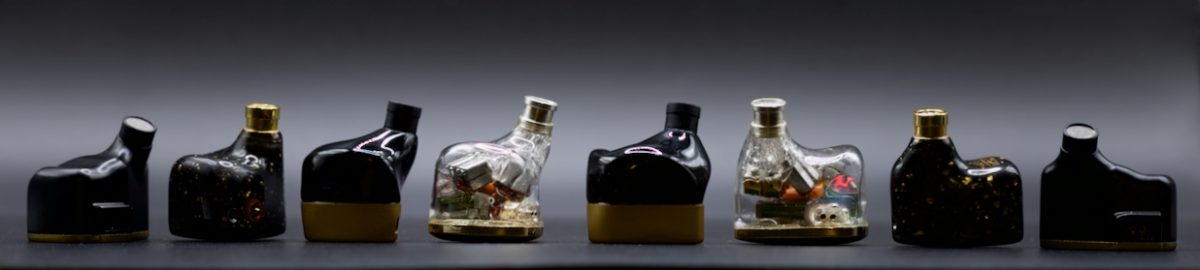
I had a chance to audition these two beauties thanks to a tour organized by Elise Audio over Head-Fi.

Starting with Arion, it is an upgrade of the Legion in every conceivable way.
The bass is, as expected, powerful, with deep extension and a prolonged rumble, but, compared to Legion, it is significantly faster, fast double bass drums not being an issue anymore. A bit of bass bleeding into the mids is unavoidable, but it is, in most cases, not hindering the enjoyment.
Mids are smooth, to the point where I wished they had more grittiness. They are pretty uncoloured, despite their noisy neighbour. The voices are centrally placed, but slightly remote. Also, do not expect the same kind of clarity as Fei Wan or the Faith Audio E1000. For complex music, the voices have a hard time cutting through the mix, the weight of the bass drawing my attention away from them. However, with less congested music, like Gretel’s squish album, Arion’s character is very different, the music sounding light like a summer breeze, with the voice up and front, floating above the instruments. In rare occasions, the bass makes its presence felt too much, though, even here.

The cymbals are located at the periphery of the soundstage, much like Legion before, but unlike Legion, this time there are a lot of elements in the immediate vicinity (I felt the stage was hollow with Legion). As for the treble sound, is a more contained one, with limited spatial spread and rather thin and delicate sounding cymbals. The extension is good, there is ample headroom over the cymbals, but the sizzle is more appropriate for dance/pop than metal. In terms of details, I’d say they take a relaxed approach, not throwing details at you, but not giving the impression something is missing either.
In terms of stage, it is very impressive. Not only it is large and tall, but there is good sound density throughout. No hollowness here.
Some peculiarities: as soon as you put them in your ears, you start feeling a subtle vibration, like a very, very faint ringing, no doubt an effect of the BCD contained therein. Also linked to this, when the cable is rubbing against your clothes, there is the same sensation, that something is vibrating.
The stock cable (made by Eletech) is very nice, soft, with no microphonics and colour matching the shells.
They need a clean, analytical or reference source, like the AK SP3000 or the Nipo N2 (despite its tendency to accentuate sub bass a tad). With MUB5, despite adding body in the mids, the treble is less detailed than I like and the bass pummelling is getting too much after one hour.

In terms of music, they can do quite well with metal, despite not being my no.1 choice for this genre. Slow jazz is very good with Arion, with natural voices, lively trumpets and an ample bass acting like an anchor. Film music is the perfect match, the OST of Hostiles or Boba Fett sounding cinematic, large, impressive, with so many different layers. Rap is another good choice and so is EDM.
In conclusion, a very accomplished set, that takes the Legion heritage and adds more precision, resulting in a greatly improved IEM. I guess its main competition is the Ice Labs Spectrumica.
Faith Audio E1000

If you take everything I said about Arion and turn it 180°, you have the E1000.
Short version: light, nimble bass, reference mids with an emphasis on upper region and sparkly, sizzling treble.
Long version:
the E1000 has one of the most natural bass reproduction I have heard in an IEM. It is very light handed, to the point of me wishing it had a bit more energy. The extension is not lacking, but the sub bass is so polite, if you blink you might miss it.
For reference: I usually complain about the bass being too much, or too slow or overwhelming, muddying the mids or any number of things, but I rarely complain about it not being enough. To make things clear, it is not a complaint in this case, more like a wish for that extra 1%.

If the sub bass keeps a low profile, starting with mid bass, the picture couldn’t be more different. E1000 has a well articulated, textured mid bass, with abundant details. Those details are not just thrown at you, but layered like a cake. Such a layering is no surprise in a multi- hybrid IEM, but in a single DD? Colour me impressed. Moving further, the lower mids are equally detailed, textured and uncoloured. There is enough grit for metal, which combined with the super fast bass, turns E1000 into a mean machine for the genre. The only negative is a perceived lack of body in the lower mids. While the edginess is there, I would have liked a bit more note weight. The same trend is present for upper mids.
The practical importance of these, is that while the timbre is spot on, in some occasions, the voices sound too ethereal, missing some core weight (imagine the difference between a ball that is filled with matter and another, made of the same material, with a hollow core, or a lower density filling in the core. They will look the same, feel somehow similar but the difference between them will still be noticeable.
Some sibilance is present, but nothing dramatic. It seemed to be amplified by wide bore tips (Eletech Baroque). Narrow bore tips were almost a must for me.
The treble is fantastic. Details, extension, body, layering, sizzle and body, everything is just right. It’s lively and organic, making this treble head very happy.
Great clarity throughout the spectrum.

The stage is reasonable large, with some height, but not a lot of depth. I’d say the IE900′ stage has a bit more width, but it is more shallow than E1000. Quite normal for a single DD to not have that much depth. The imaging is much better than expected from a single DD.
The stock cable is thick and unwieldy. A far cry from the Flipears’s effort. Sonically, it doesn’t do E1000 any favours either, as it tends to amplify the slight lack of body and add some harshness in the upper mids. I had much better results with the Quad Copper, Ulan 8w and Eletech’s 5th Ode, cables that tamed the upper mids and brought in a bit of weight in the lower frequencies. Other cables took it in the opposite direction, Apollo GT increasing the detail retrieval but making it quite shrill. Hansound Nyx brought more hollowness, so a clear no-go for me.
The biggest minus of the E1000 is the comfort, due to its particular shell shape and short-ish nozzles.
E1000 benefits greatly from a warm source, something like tubes (Apos Gremlin was used) or R2R, where the reasonable priced Fiio M33 did a great job. MUB5 was good, but not great, while Nipo N2 seemed to “correct” the bass, and put a flashlight on the voices. Of course, there is an immediate fix to the few E1000’s shortcomings, in the form of the Audma Brioso. With a simple twist of a knob, a tasteful bass shelf is added, without detectable impact on the mids. Furthermore, activating the Elisa circuitry (let’s call it simplistically, a form of cross-feeding), adds all the fullness and body I was needing. Frankly, once you hear it with Elisa on, it is hard to get back to normal sources. The drawback, apart from the prohibitive price, is a los of stage width upon activating Elisa, but more than compensated for by the extra thickness.
Where does it excel? The sound is one of the most natural and most pure I have heard to date. The level of details, and even more so, the way they are presented is downright impressive. It is enough to focus on one part and look closely at the layers, decorticating them one by one, to realise the amount of effort that went into the E1000. While I tend not to prefer one technology over another, I must admit, the single DD IEMs sound more natural than anything.
E1000 is good for bass light music, such as rock, metal, progressive, indie and many others. I cannot imagine it being the best for EDM, though. Or any other kind of bass heavy music. Rap, hip-hop lovers might also feel this set is lacking in pure extension.

For jazz, the answer is more nuanced. Depending on the artist, male or female, and the type of accompaniment, it can be either brilliant or slightly thin. The interplay bass – drums, with snares vibrating very clearly is very nice. I spent hours listening to slow-ish jazz, the emphasis on voices making E1000 a great contender to enter my collection.
The natural competition is the TXN Diamond, another Ti shells single DD, that has even more energy in the upper mids, but was easily tamed by using the Ulan 8w cable. It is significantly cheaper and more ergonomic. I wish I had them both at the same time, as I cannot reliably compare them based on memories.
The other alternative is the DIta Ventura, significantly more expensive, with an equally stubborn cable. The differences in sound are more marked, with Ventura having a more buttery, warm sound, with less treble energy and more note weight.
From these two, my preference goes, without a doubt to E1000, despite it needing another cable and careful source pairing.
