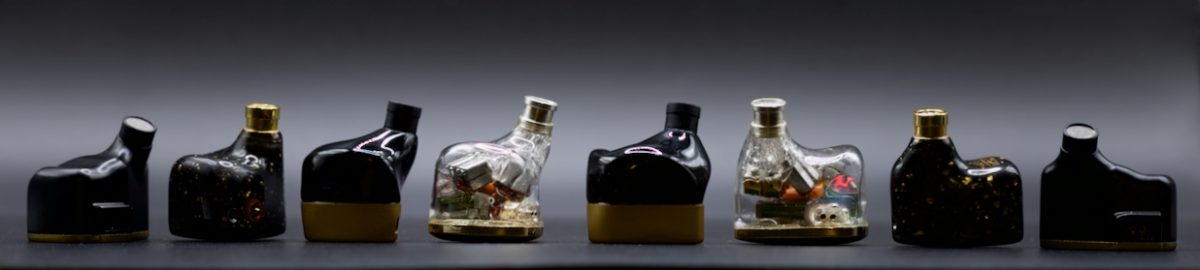

After Epic Audio Intoxication, here’s another gem from the same company. Another long-term loaner from a friend. The unit got sold before the end of the review, so no vested interests. Thanks to the new owner for patiently waiting for me to finish my evaluation.
“Epic Audio is considered a predominant name in the Chi-fi audio world, but they are looking to establish themselves as a company dedicated to producing high-quality even carefully tuned earphones for music enthusiasts. This company is not very old, they were founded in early 2024. Their product lineup is divided into several series: Primer, High-performing, Nucleus, Ultrahigh, Prerogative, and Innovation series. Regardless of product positioning, they have focused in-house engineering throughout the entire process of every earphone. The tuning each of their IEMs through their own customization with giving premium price tag. Interestingly, they also design customized shells according to the customer’s preferences.”
Epic Audio has not officially released many details about Apocalypse and details such as driver configuration have not been disclosed.
Apocalypse seemingly was personally designed by the owner of EpicAudio, and he has told that EpicAudio will no longer reveal the driver configurations of its future models. The driver config could create some bias , hence the company wanted “to let people forget the configuration and focus on its sound.”
It was released in three colors: gold, silver, and black. Only 11 units of each color were produced, for a total of 33 units.
The insides of this set are undisclosed, which I find interesting, and I can’t say I disagree with their strategy. It takes some balls to do it and in this crowded market I am happy to see someone straying from the beaten paths.
In terms of packing, Apocalypse rivals the Fat Freq’s Grand Maestro Anniversary Founder Edition (GMAFE), with everything being of high quality, from the piano gloss wooden box to the two little sarcophagi. Well, except for the cable, which is a far cry from the famous Ascendium.

The shell construction is outstanding. The shells are very heavy, made of metal, with a rustic, hammered finish. They have short, stubby nozzles with a considerable lip at the edge of said nozzle, making tips rolling a bit adventurous.

At 22,8g, they are the second heaviest I have measured, being overtaken only by the Rhapsodio Supreme V3. Despite the large size, comfort is quite good for me, with only some light discomfort after longer listening sessions (longer than 2 hours). However, you do feel them in your ears, the large nozzle being a bit intrusive, and the weight being a constant reminder that something is in your ear.
The cable is very thin and flexible, a departure from some of the cables we see on flagship IEMs these days. One of the most comfortable cables I had the pleasure of using. However, many will consider this cable does not belong with the rest of the package. After having spent a week with it, I can only advise you to give it a chance. I wish more cables were that comfortable.

Sound
Bass is mid bass centered, with a very gentle roll-off below 40Hz. The accent here is not on rumble, but more on integration and the impression of neutrality. While in no way a reference set, the way nothing sticks out too much, makes it an easy-to-listen IEM. The bass lends a nice foundation to the rest of the spectrum, and it’s not overpowering the music. While not the lushest, the bass makes up in terms of details, being very easy to follow a bass line, and even then not lose track of the rest of the music. This is helped by the class leading instrument separation. Still, I’d rate this set more for metal or jazz than EDM. It just doesn’t have that wall-shattering impact of some other sets.
On bass-heavy pieces, like the produk 29, the bass reminds me of Storm, liquid, nimble, textured, while maintaining a level of politeness more akin to BAs than DDs. Simply switching between Apocalypse and Fei Wan or X, reveals a whole new dimension to the bass, a tactility that Apocalypse cannot reproduce (to my ears).
Mids are forward, with a level of details similar to the big hitters like Storm or Tet. With blazing fast transients, the attack is fast, notes reaching maximum amplitude instantly. This is evident in, for example, electric guitars, where fast notes are all played accurately, making the distinction between them a piece of cake. Slayer’s Raining Blood is played with a clarity that I have only heard in the very best IEMs before. The only problem is the occasional mid bass bleeding into the mids, negating, in a small measure, the effect of the particularly detailed mids. I would have liked a touch more roughness in the lower mids, for acts like Amon Amarth.
In the beginning I found Apocalypse to be a bit rough in the upper mids, even shouty at times. After a short stint with PMG APX ME, I seem to have been recalibrated, and I am a lot more tolerant. There are still instances where the upper mids tend to be harsh.
The voices are forward, intimate even, with some recordings sounding slightly claustrophobic. In terms of timbre, the voices are more towards the dry side, a departure from, say Traillii, where the voices are much lusher.
Treble has a bit of a split personality. First of all, it is very detailed, despite being tucked behind the upper mids a little. The edge is crisp, the notes are full-bodied, but once the notes reach their maximum, they tend to die off quickly. I find myself wishing for a bit longer note, a longer lasting sensation. There is relatively little air surrounding the cymbals, and while this works very well with hi-hats, for the rest of them is a bit limiting. Combined with the fact that the cymbals are close to the rest of the instruments (see stage section), the overall impression is of a dark-ish IEM. Easy to listen because of the restrained energy, it does lack a bit of air, which, depending on the album, could be a bigger or lesser problem. If you are looking for a treble specialist, this ain’t it.
The lack of air is compensated by the details. Small things, like the rattling of the snare drum wires remain a constant presence, bringing a nice, comfy sparkle to the sound.
Sound stage
Apocalypse’s stage is tall, with some depth and relatively narrow, for an IEM at this level. Overall, the stage is well laid out, respecting the logical placement of sounds. Instrument separation is pretty good, and more importantly is done in a way that doesn’t feel artificial.
With complex music, like progressive or classical, the stage feels, at times, spatially congested, the instruments, although clearly separated, lacking a bit of space between them. Jazz, though, fits it like a glove, being more coherent with the small venue performance sound created by the Apocalypse.
Cables
Ulan 8w brings the upper mids harshness down, while leaving the voice sparkle intact. The stage gets a modest bump, without losing coherence.
Vesper Shielded has a more marked effect on the stage, making it larger and taller, pushing the bass and highs towards the periphery and bringing them closer to a traditional V shape IEM kind of stage. The bass receives a mobility boost, extending further into depth and width, while the cymbals are chirpier. Of course, there is a trade-off, the comfort, taking a big hit compared to stock cable.
Sources
Easy to drive, more or less at the same level as Traillii JP, Apocalypse has no specific requirements for source pairings. Naturally, given its fairly neutral sound, a bit warmer sources can augment the sense of macro dynamism, but this is a highly subjective matter.
Particularly pleasant pairings were Audma Brioso (no Elisa needed), AK SP3000, LP W4 dongle and Teac UD-507. Nipo N2 seemed to induce a certain harshness in upper registers. IBasso 340Max seemed to give the sub bass a bit of a boost in impact. Highly recommended.

Comparisons
Fei Wan
Fei Wan has a lot more energy and extension in the treble. This translates to an abundance of upper-treble “air,” crisp cymbal decay, micro-detail trailing edges, and a wide, open sense of soundstage presentation.
Apocalypse’s highs roll off sharply in the air region, dropping significantly below the Feiwan’s. The result is a slightly darker, more closed-in upper treble with noticeably muted shimmer and less atmospheric breathiness.
The Fei Wan carries a more traditional, robust bass shelf. It elevates higher in the sub-bass and maintains that extra energy through the mid-bass. This slower, more gradual slope gives the bass substantial physical slam, a warm organic bloom, and a thick, heavy texture that grounds low-end instruments like bass guitars and kick drums.
The Apocalypse features a flatter, cleaner sub-bass glide that tucks down much earlier. While it may lack the sheer visceral punch and organic weight of the Fei Wan, its bass texture feels incredibly fast, nimble, and highly articulate, free of any perceived bloat.
As Fei Wan’s bass shelf bleeds gently into the lower mid-range (200 Hz−500 Hz), male and female vocals gain a lot of chesty fundamental warmth and body. Vocals sound relatively thick (not like Intoxication or Tet, though), lush, and to some extent, intimate. Furthermore, the relaxed upper-midrange rise ensures that vocals never sound shouty or sharp.
Elysian X
The Elysian X is an absolute powerhouse in the air region. It has a more extended shelf than Apocalypse and features an intense, sustained energy output stretching out to 16 kHz before dropping off. Driven by its multi-EST setup, the X delivers an incredibly wide soundstage, hyper-etched micro-details, and an airy, breathy shimmer that sounds distinctly effortless and uncompressed (as in it is given space to unfold in all its greatness).
In terms of bass, X has the capacity to keep it hidden until it is really needed. By carving out the mid-bass completely, the X isolates sub-bass rumble from low-mid masking. The result is an exceptionally fast, highly textured low-end that provides immense physical sub-bass vibration without adding any thick or muddy layer to the tracks. Play rap, though, and be shocked at the amount of rumble X can put out. The sub bass has a longer sustain, putting a bit more meat on the bone.
A particular area of interest for me, lower mids, is more forward, and fuller sounding on Apocalypse, compared to X, which, in turn, seems to have better grit, making it perfect for metal. When it comes to voices, I find X to be spot on in terms of timbre and details.
Vocals sound pristine, highly transparent, but not as forward as Apocalypse, yet they escape the raw, thin shoutiness that on rare occasions plagues the latter.
The imaging on X is more precise, the instrument separation more distinct, while remaining an utterly musical set. X also has the edge on sheer sound stage width, while Apocalypse images taller.
In terms of details, I find Apocalypse to have significantly better details retrieval, and overall higher resolution than X.
Traillii JP
Can Apocalypse hold its ground in front of the vocals specialist? Well, yes and no! Traillii has a much larger stage, and more refinement. The treble has more air, the voices are less intimate and more lush, even though one could argue their human nature is artificially enhanced. Apocalypse has better instrument separation, being better suited for technical music or detail heads.
Rhapsodio Prime Ti
Single magnetostatic driver with a relaxed tuning, favouring cohesion and melody over details or stage. Completely different direction with one connecting directly to your nervous system, to deliver tiny jolts of electricity, the other singing you a lullaby (Shh, you’re safe now). For electrified music, Apocalypse lives up to its name, but for slow, relaxed music, Prime Ti delivers a more soothing rendition. (Lolek and Bolek, anyone?!).

L to R: Rhapsodio Prime Ti, Apocalypse, Traillii JP, Apocalypse, Elysian X
Songs
Purple Rain – This is one of the places where the upper mids and lower treble of Apocalypse are a bit too hot for me. However, it remains completely enjoyable. On the positive sides, the hi-hats have an amazing edge, full bodied, decisive, cutting like a scalpel, one of the best renditions ever. The sub/mid bass balance is perfect and the guitar solo is very clear, although this is a more backwards placed solo, not forward like in the metal. In fact throughout the song, the guitar is very detailed, including that tiny artefact, at 3:11, which somehow adds to the charm of this song. The voice is very natural, free of any colouration and naturally flowing. The little harshness that is noticeable here is more due to the cymbals rather than voice.
Much to my surprise, Fei Wan, that scored very well in other songs, struggled a bit here. Cymbals have a more metallic sheen, they are less thick than Apocalypse’s and in general seem to sound a bit less natural. I do appreciate the larger stage, with a tad more depth, but overall I prefer the Apocalypse.
Prime Ti having a very relaxed sound signature has a two fold effect on this song. On one hand, it makes it sound really dated, and I do not mean this in a bad way. It sounds just like this song sounded to me at its time. On the other hand, since Prime Ti is not so focused on details, more brain “processing power” remains available for the melodic part. The voice is further away, almost reminding me of an in-car stereo.
Sade – Smooth Operator. When I was younger, I have developed a sort of an obsession for this song, being often the reference I used for my copy of a copy of a copied cassette tape. It has everything, a nice bass line, saxophone, all sorts of percussion instruments. Keeping everything in check requires sublime control, which is exactly what Apocalypse provides. With it’s pronounced treble and fast bass, some of the lushness of this song is rubbed off, but in exchange, the clarity is simply outstanding.
It comes as no surprise that Traillii fares better here. Maybe it’s not even a fair fight, Traillii reproducing to the letter the sound of that Technics deck I only managed to get when they were becoming irrelevant. The voice is more distant, but a bit warmer, the sparkle of the percussion is more intense, tangible almost. In other words, Traillii is smoother.
Tribulation – Elementals takes advantage of Apocalypse’s detailed and intimate presentation, as it’s filled to the brim with instrumentation. Apocalypse’s natural brightness comes handy here, just like the forward guitars. Even though the stage is not gigantic, everything has space to breathe, and the overall presentation does not feel congested.
Traillii JP’s larger stage makes this sound more cinematic, but somehow less forceful. With the bass and guitars pushed further away, it’s easy to prefer Apocalypse for this track.
Joe Bonamassa – Live after dark is the routine sibilance check, but not only that. The guitar solos are tantalising, and this is an area where Apocalypse excels. Sibilance is, of course, present, but very well controlled, which is on one hand surprising from such a mids forward set, but also not completely unexpected in view of the high refinement this set has shown so far.
Fei Wan does a similar job, with more body in the lower mids and a bass that is spreading a bit further, thus extending the stage. About the same amount of sibilance as Apocalypse, but a bit thinner sounding, as if it raises and disappears more rapidly. Just like the cymbals that are more focused, more condensed, not all over the place, with a bit more air between them. Bass guitar is more forward, more present, which adds a plus of dynamism to the song.
Boz Scaggs – Thanks to you
Apocalypse pushes the mid bass and voice forward, creating a relatively intimate presentation. The voice takes the center stage, being very well highlighted, even though at times the mid bass seems to get in the way a little bit.

Fei Wan punches very hard with its warm, enveloping bass and the soothing voice rendition. I particularly appreciate the lack of bass bleeding into the mids. Despite a healthy bass shelf, the voice, remains largely unaffected, with a warm, soothing touch. The voice is neither too intimate, nor distant. Simply perfect. The cymbals are pushed further away horizontally and vertically, acting not only as a stage extender, but also as a counterbalance to the bass.
Traillii JP has larger stage, more airy cymbals and a more natural rendition of the voice. This raises the question at which point detailed becomes too detailed. While Apocalypse has the voice perfectly unveiled, that extra level of details does not seem to bring much to this song. While I prefer Traillii, Apocalypse is not far behind.
Aphex Twin – produk 29 [101] A real bass festival, this serves Fei Wan a little better than Apocalypse. Apocalypse does a good job at filling your head with good quality bass, there is no substitute for the storm unleashed by Fei Wan or X. Either of these two has a larger stage and more physical bass, which for me, sound better and closer to my expectations.
Conclusions
If you prefer a highly transparent, forward-midrange monitor with lightning-fast, clean low-end response (at the expense of treble air and vocal warmth), the Apocalypse is tuned for that clinical clarity, while preserving very good musicality.
If you want a grand, cinematic presentation characterized by rich voice body, thick tactile bass texture, and a beautifully extended, sparkly top-end air, then something like Fei Wan or Elysian X offers the more complete, atmospheric tuning.
While source pairing is never going to be a problem with this set, choosing the right genre is of paramount importance. Technical music, like prog metal, technical death metal gets an unexpected boost, thanks to the hyper detailed presentation and strong, forceful sound. Another genre where it excels is acoustic and vocal jazz, creating a club atmosphere with the singer close to you. Also, string quartets sounded good to me, with a richness of tones matching the size of the stage to perfection. In fact, any string instruments, just try Shellmounds by Graceon and be amazed how clearly textured that cello remains throughout the song. However, there is a catch, the enjoyment depends on the production, old school metal being prone to induce fatigue, due to overly emphasized 3-4KHz region, overlapping with Apocalypse’s strong pinna gain.
Where I find it to work less great is EDM, Apocalypse having a “normal” sub bass and not a pair of cannons. Also, I would have liked more headroom for that mid bass to spread out, as it sometimes feel like I’m under siege. As already mentioned, some prog rock (like Rush) hits a bit of upper mids shoutiness for me.
Classical music, like full orchestra symphonies, needs more space to unfold, for my preference. The small stage combined with everything being pushed forward makes for a sub-optimal listening for me.
Pop music is another genre where the production can make or break your experience with Apocalypse. While I do appreciate the forward voices, unless there is a lot of bass present (like the Demon Hunters soundtrack), you might end up with a rather piercing experience (Michael Jackson – Bad).
I feel there is a question left unanswered though, how does it compare to Intoxication. This is based on memory, so take it with a grain of salt. Intoxication and Apocalypse share the same all-forward tuning, with Intoxication being more V shaped, with a bass hitting with the force of a hydraulic breaker. After a couple of songs you feel like your head is stuck in the drum kit during a performance of Slayer’s Chemical Warfare. Apocalypse is a lot more polite, with less sub and mid bass, leaving the scene for the lower mids to shine. With more details, but less roughness in the lower mids, Apocalypse does not reach the same level of chugginess as Intoxication. Another notable difference is the upper mids, Intoxication playing that safe, with an aggressive pinna gain followed by a safe scoop and then killing any sibilance by dropping markedly at around 6 kHz, the usual trouble spot. While also having a slightly dark-ish sound, Intoxication has a lot more air. I find Apocalypse easier to listen, thanks to its closer to neutral tuning, while Intoxication is more fun, but so intense that it has to be consumed in moderation (you know, not to get…intoxicated).
