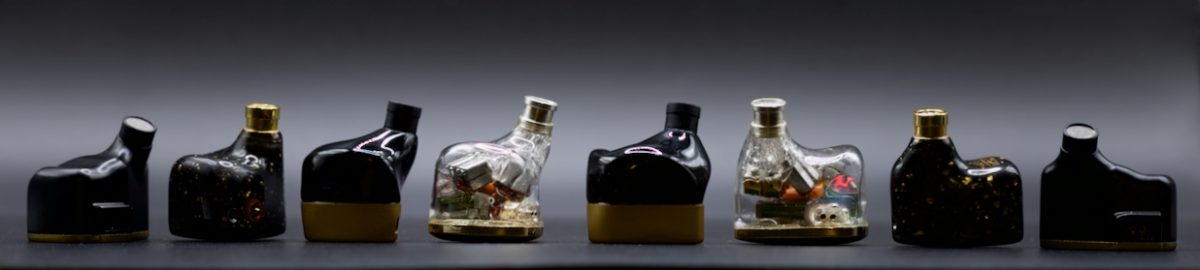
Epic Audio, the company that birthed Schizophrenia and Incontinence, has created an ultra-flagship IEM, in the aptly named Intoxication and today I’m going to take a deep look at it.

Disclaimer: This unit is on loan from a friend, with no obligation whatsoever. I had it with me for about two weeks, during which time I have listened to it extensively, going through my most preferred music, but also exploring new things, since it is such a good allrounder.
The Epic Audio brand is almost unknown in the West, but it has garnered a lot of popularity in Asia, where they have released a number of products which are quite appreciated.
The Epic Audio Intoxication boasts an impressive driver count, with 12 BA + 1 PBA + 8 EST+ 2 BCD. The shells are made of forged titanium alloy, with a hammered aspect, rough and sturdy.

The shells are comfortable, even though a bit heavy, at 12.8 g. The short and stubby nozzle lacks a lip, meaning that some tips tend to slide too far up. This can be mitigated with tips like Spinfit, or by simply adding a small O ring on the nozzle, upstream from the tip. The shells assembly is on the artisanal side, with a fairly large gap between the face plate and the body of the shell. Personally, I don’t mind this boutique look.

They arrive in a suitcase style metallic case, like some of the Rhapsodio IEMs or the Nightjar Duality, and they are accompanied by a good quality 6W cable.

Sound
The overall tuning is a mild W, with no parts of the spectrum particularly emphasised.
The bass is markedly mid bass centred, with a roll-off starting quite early, around 50Hz. The end effect is a fast bass, putting bass guitar first. The extension is good, but do not expect this set to move mountains, not even to make you feel like the walls are shaking. Instead, it displays a fast bass, with sublime articulation and fair rumble. If I were to compare, the bass is somewhere between Storm and Traillii, it is not as fluid as Storm’s, but more intense than Traillii’s. The main attributes are speed and forwardness, as Intoxication brings everything to the foreground. Synth-heavy music benefit from the presence of those BCD, providing a tactile sound with a sub-woofer like rumble, compensating for the early roll-off. Yet, the bass remains relatively dry, and it does not offer that sense of immersion found in UM Pentara or Vortex Reference. A correct performance from my point of view. For some songs there is just a touch too much focus on mid bass; there, JVC Spiral dot tips can usually lend a hand and re-establish balance (see the tips section).
Mids are where Intoxication excels. They are pushed forward in a manner similar to some Noble models, carrying a slight warm tilt, but keeping a sense of realism that I didn’t even know I needed. There is nothing bombastic about Intoxications’s mids. Take vocals for example. Intoxication does not strike you like a particularly clear set, but despite this, many details, micro- and macro-nuances are revealed with ease, brought closer, and are perfectly discernible from the forceful mid bass. In terms of grittiness, there is some, but not as much as Pentara, for example. Intoxication’s advantage is loud and clear in terms of note weight. Lower mids feel like a natural extension of the mid bass and they hit with the same force, the passage being seamless. The upper mids are polite, almost tame, but this is not a bad thing, as it is virtualyl impossible to make Intoxication sound shouty. Even at abnormally high levels, it remains composed and harmonious. The guitar solos, while very good sounding, are less nerve wrecking than Reference’s. Sometimes is good, sometimes I want to hear the guitars screaming like a thousand Valkyries.
The treble is smooth, slightly tucked behind the mids, but it surprises from time to time with crystal clear sounds, like a ride bell. The level of details is good, but once more, this is the kind of IEM that doesn’t scream at you. The details are delicate, they have to be discovered, they don’t just reveal themselves from the first listening. There is a richness of textures in the highs that rivals that in the bass, but the energy could have been a bit higher. Despite the 8EST, the treble could have used more air, as it comes across as a bit too polite for me. This, too, can be mitigated with tips, bringing Intoxication closer to my ideal.
There is no sibilance, no matter how bad the recording, even though it comes sometimes at the cost of some fine sparkle or excitement.
Stage and separation
This is where things get really interesting. Intoxication has a relatively narrow stage, but not quite claustrophobic. What is striking though is how deep the stage is. The details are arranged more in depth than in width. If the NGaudio Erebus had a tall and narrow stage, the Intoxication has a deep and tall stage, while still offering more width than Erebus. This particular presentation makes Intoxication an engaging IEM, you are part of the music, it is not just presented to you. Very atmospheric, and holographic, once you get used to the stage that could be considered “too narrow” by today’s standards.
There is something about this IEM pushing me to increase the volume way above my normal listening level, just because I can. There is nothing strident, you can ramp up as much as you want, it maintains its composure like nothing else. While the overall presentation remains the same when you do so, it’s sense of immersion changes, and it starts to sound like a private concert in a tiny room, with the singer standing next to you and the rest of the guys gathered cozily around, the headstock of the bass guitar gently hitting the rhythm guitarist and the lead contorting to avoid the big ride cymbal. It’s not that air is lacking, it’s just that the presentation is very forward, akin to some Noble models (Viking Ragnar), and very dense (not to be confused with lack of air). The layering goes a long way in depth, with so many layers of details that you have to listen over and over again.

The stage does not impress its width, but the depth is something else. It extends front and back, with good 3D sensation.
This is a very intense IEM, not because one part of the spectrum would be overexpressed, but because it is so immersive and fun.
Sources

Nipo N2 is a good match for Intoxication
Intoxication is not picky, with any source I have tried, be it the powerful Audma Brioso or the miniature AP80 Pro Max, the sound was large and immersive. One particular thing is the low volume sound, which, unlike other IEMs maintains the characteristics of the high volume. There is no need to crank it up to have more bass or more highs, everything is there even at low volume.
With Audma Brioso, the sound was slightly too dense, too much happening simultaneously, very pleasant but also a bit fatiguing. Also, Brioso has caused some ghost reverbs in the shells (the BCDs, I assume), when adjusting the shells position while music was not playing. I’ve experienced the same with my desk amplifier, the Teac UD-507.

While perfectly suitable, Audma Brioso was a bit overkill
Particular synergy was present with AK SR35, which is great news for those looking for a super portable setup, and with its bigger brother, the SP3000, which, thanks to DAR, brings more air and stage width.
Tips and cables
Being a rather bassy IEM, focused on mid bass, Intoxication benefits greatly from skinny tips, like the JVS Spiral dot. Not only they lighten the weight of that aggressive mid bass, but they also lift treble a bit, all without significantly altering the overall sound, which remains a bass boosted one.
By comparison, Baroque stage, adds a bit of mid bass and note weight to all sections. This can make them sound bloated in some occasions. The longer Spinfit enhance the stage and imaging, but take away a bit of the fun factor.
Tangzu Tang Sancai provide a good balance of bass/treble, while narrowing the stage further.
Important tip: Since there is no lip on the nozzle, some tips have a tendency to slide to much up the nozzle and the edge of the tip can protrude out of the silicone doughnot, which can lead to scratches. Something that worked great for me was adding a small O ring (4.5×2) in front of the tip. This serves multiple purposes: 1) the metal nozzle can no longer extend outwards of the tip; 2) a deeper insertion is achieved, important for the BCD, but also for good insulation; 3) this opens the door to using smaller tips, with good chances of further tuning the bass/stage. My preferred setup was said O ring + JVC Spiral Dot.

Placing O-rings on the nozzle leaves enough space for the tip
In terms of cables, apart from stock, a good match was the Copper XL, an SPC mix, that, to my ears, made the treble a little bit more shimmery and with faster attack.

The 6w, paracord clad, stock cable is not just another cable, it plays a significant role in achieving a balanced sound, easing the note weight and making it easier to listen for long periods. Many upgrade cables focus on enhancing bass and mids presentation, but as Intoxication is starting off with good stats in this regard, a “heavy” cable only amplifies its tendency to thump like a marching cadet. The stock cable is like a pair of sneakers compared to heavy army boots.
As I find myself in one of those “less is more” periods, I do prefer the stock cable, even against cables with the purest pedigree, like Eletech’s 5th Ode or Cross Lambda’s latest flagship, Apollo GT, both of which add stage width, but also a bit of fullness in mids and bass, which, frankly, is not needed.
Apart from the stock 6W cable, along with the IEMs I have received an Epic Audio upgrade cable, featuring an impressive single strand 6N gold-plated pure silver, 14 cores 6N silver-plated single-crystal copper, 21 cores silver-copper-palladium alloy, dual layer shielding with TPE+polyester mesh. This follows in the footsteps of the stock cable, but enhances aspects like stage width, treble air and layering.

Comparisons
NGaudio Erebus: 1DD, 6BAs, 8ESTs
With a similar tuning philosophy, Erebus relies on a stage that is relatively narrow, but very tall and fairly deep. Erebus has a swifter passage from low to high frequencies, with good mids note weight, but somehow different from Intoxication. Despite having 1DD, Erebus has a more light-handed bass, thanks to a better sub/mid bass balance. At the same time, Erebus has maybe the best mid bass for my taste, in terms of articulation and sheer level of details. While Intoxication has the vocals more forward, Erebus is pushing those in the background a bit. Intoxication has more note weight across the board, but this can also be its downfall. In some occasions, it sounds artificially thick by comparison with Erebus. Erebus has more textures in the mids, and a treble that is more shimmery, while the Intoxication scores extra points for the texture of said highs.

UM Pentara: 2DDs, 4BAs, 4ESTs, 2BCD, 1 UM FreqShift Driver
Aside from Intoxication, the only one of this comparison sporting BCDs. Pentara has faster bass, despite having significantly more low-end extension. Yes, Pentara can be boomy, but because the bass is so fast, this is never a problem, not even with the fastest music. Pentara thus, sounds faster than Intoxication and depending on the music, it may sound less warm, less bassy. Make no mistakes though, in terms of absolute bass power, Pentara can deliver a bass with more impact and that is descending much lower than Intoxication’s. Pentara has the upper hand in clarity, helped by the larger canvas (stage) on which to paint all these sounds. In terms of note weight, Intoxication is heavier, fuller and warmer. Pentara trails behind when the music is congested, with mid treble a bit on the harsh side compared to the impassible Intoxication. Perfect voice placement for Pentara, but not as emotional as Intoxication, and with more sibilance too. Perfect grit too. On the account of more 3D presentation, grittiness and liveliness in the treble, Pentara remains my favourite of the two.
Traillii JP: 8BAs, 4ESTs. The king of vocals…
It’s almost logical at this point that Traillii has less bass than Intoxication. Helped by its massive stage, Traillii conquers with voices that exude force and naturalness, brought to the forefront, easily floating above the mix. The timbre is, for me, the best of all my IEMs. The stage is massive, but the separation is less evident than with Intoxication. Traillii went for a natural integration of elements, even is this meant leaving some micro-details out. Intoxication has better imaging, despite its particular stage construction. Or maybe BECAUSE of that. Regardless, compared to Intoxication, Traillii is like a racing car compared to a sport SUV. It’s nimble, unencumbered, with the most natural treble (as the story goes, I was visiting a certain audio shop looking to buy the Anni ‘23, but they’ve sold the last one and, when I heard Traillii, I bumped my budget and got that instead; never regretted it one bit). There are certain details on Traillii, like the tuning of the drums, the rattling of the snares, the mouth shape of the singer, the quality of the cymbals sounds, that no other IEM matched so far. It can be, occasionally, a bit shrill, by comparison with Intoxication.
Moving from Traillii to Intoxication is like pruning a tree while it’s still carrying fruits. The openness is missing; the mid bass is on the overwhelming side, the treble, although more detailed is pushed back a little, lacking that Traillii shine. However, after a short acclimatisation, the qualities of Intoxication re-emerge: powerful, dense, bassy and with incisive, yet moderated, treble. For bass heavy genres, Traillii is no match for this level of bass and power, for purely vocal centred, it depends on how thick you like those vocals.
Vortex Reference: 2DD, 2 XMEMS
Things get very interesting here, Reference is a strong V shaped IEM, with the mids clearly taking a back step from the rest, a deeply satisfying growling bass and treble that is more cutting than Intoxication. By comparison with Intoxication, reference is at the same time more bassy and brighter. The deep V creates a bit of a disconnection between the low and high frequencies, which might not sound very natural on paper, but it is pleasant to listen to. The stage is much larger than Intoxication’s and the layering is done intelligently on all three axes, with more marked separation.
Intoxication has more intimately rendered voices, while Reference has them coming from some distance. In most cases, this works fine, with good presence and note body, but in some occasions (complex songs with many instruments), the voices seem small compared to the rest. However, in terms of pure mids details, Reference is one step above Intoxication. This comes with a price, though, with the voices having the slightest metallic tint and, in some instances, even being a bit piercing. This is compensated for by the lively, nerves tingling, guitar solos. Intoxication has more note weight, being thick, but not syrupy.

Songs
Who will comfort me – Melodie Gardot
This song is an impressive display of skill from Intoxication. First of all, it is as if the stage has suddenly been enlarged, becoming a perfect sphere. This while keeping the voice upfront, clear, and detailed. A delicate balance is kept between the guitar, bass and the trumpet, while the sound of brushes on the drum head has a high sense of realism; you can hear the bristles, almost visualise them. On top of everything, you have the voice, with the way she ends the words in that accented final ‘yeah’.
Pentara pushes the voice even further forward, and it provides enhanced overall clarity. It is equally immersive, even though the impression of space is enhanced. The trumpet sounds rougher, but so does the voice. Some faint harshness in the mids is present, especially in the last part of the song, when all the instruments are louder and overlap. The instrument separation feels a tad more artificial, too clear to be true. The sound is a lot more open, brighter, colder, but also with slight sibilance. Overall, I prefer Intoxication.
Reference is crystal clear, but comes across as slightly piercing. It’s ok for that rugged trumpet sound, but the percussion can be overwhelming. The voice is missing a bit of chest/body by comparison with Intoxication’s full sound. The separation is kept natural sounding, with clear spaces between instruments (air) but with a less defined edge than Pentara. I would still take Intoxication over Reference.
All eyez on me – 2Pac
One of my best test tracks for sibilance, but Intoxication is incredibly resistant to sibilance. It passes with flying colours. The slight lack of air movement in the bass is clearly felt here, but the bass guitar offers enough entertainment. It’s got a punch that makes you quickly forget that lack of air in the bass. The polite treble comes as a big advantage now, with great air and thickness.
Pentara surprised me here, I expected it to be brighter, but in reality, it holds its ground rather well. A tad more rumble, with a sweeter, slightly slower decay, in the sub bass, deliverign a more visceral rumble, more airy bass (think of it as heavy cream vs whipped cream). The sibilance is well controlled but not entirely absent. Voice placement is perfect, but in terms of timbre a slight brightness is noticeable.
Reference is a completely different story. There is a lot more space and air, with the voice pushed gently back, but still easily on top of the mix. The upper mids are a bit harsh here, with the voice having a slight brittleness to it. Clarity is the best of the three, but the question is whether so much clarity brings anything here. The whole approach is maybe a bit too digital and too clean.

Indifferent – Soen
Nice, slow song, highlighting both vocals and imaging. The voice is remarkably clear, while not giving the impression of being digital. For a warm set, Intoxication sounds remarkably neutral in the mids, with no hint of added warmth. There is a tasteful coarseness in Joel’s voice, which is kept perfectly distinct from the woodiness of the strings. The vocal harmonies are harrowing and quickly inducing goose bumps. The voice is very central, very close, as if he is singing just for you.
Pentara flexes its muscles and imbues the song with a cinematic stage, with masterfully placed harmonies and a voice incredibly detailed, while maintaining a good level of emotions. It does come across as slightly less musical than Intoxication, maybe leaning too much on the technical side, when this song is more about emotions.
Reference does a good job, highlighting every minute detail, and making the vocal delivery more urgent, stronger. During the chorus, you can perceive a faint lack of body. However, the overall delivery is at least as emotional as Intoxication’s. More lively, brighter, but also maybe a bit less connected than Intoxication.
Policy of truth – Depeche Mode
Very powerful rendition, I don’t think I’ve heard this song sound so big before. The bass is nicely layered, the voice is near, and the cymbals are at the same time cutting, yet smooth enough. The snare at around 2:22 is like thunder, while the keyboard has a hypnotic presence. The slight fry in the voice, the superposition of these elements towards the end of the song, contrasting with the simplicity of the beginning, the force of the bass drum, are all markers of greatness. The only let down is the stage slightly narrow.
Reference leads the charge with large, articulated bass, plenty of details in the cymbals (like an Easter egg) in the beginning of the song, but slightly too strong during the chorus. The layering of all these elements is great, creating a panoramic soundscape, with the voice having the right mix of warmth/body/details. Despite some tendency towards shrillingness towards the end, I prefer the Reference over the Intoxication.
Be still my beating heart – Sting
Intoxication presents a slightly different version, more intimate, but very detailed. Unlike the previous song, a slight warmifying effect is clear here, but it is tasteful and discreet. There is a lot of mid bass, making the bass guitar too present. I find myself often distracted by the bass when trying to follow the voice or the other way around.
Pentara sounds panoramic, with the bass guitar clearly defined and very airy treble. There is less note weight in the mids, but it does work quite well here. The split of hi-hats between L and R is wonderful, creating a vast space for the rest of the music. The bass guitar line is easier to follow, despite being less in your face than with Intoxication. The voice seems to spread further away.
Pentara seems to be immune to genre changes, as it shines here, with ease. The voice is powerful, close, but not claustrophobic. The bass leaves a longer lasting impression, like a deeper, longer vibration, which would probably be best described as a ghost note, as the driver is always ready to deliver the next note with the same acute attack. Placed right in the middle between Intoxication’s upfront presentation and Reference’s distant one, Pentara is the one to beat here.
Reference is here to prove one more time the genre can make or break an IEM, for Sting’s voice can take full advantage of the IEMs technical prowess. Notes have good weight and the voice is not missing any warmth. The bass guitar, while present and detailed, is pushed further away, leaving room for the rest. The only complaint I can bring is a very faint digital tint in the cymbals sound.

Life after dark – Joe Bonamasa
I’ve listened to this track tens of times, as it is very good at revealing any harshness in the voice rendering. With countless sets, the hard consonants are just too loud, too edgy and there is always some sibilance. Well, not with Intoxication. The voice is magically fixed, and there are very fine traces of sibilance. The downside is the guitar sounding just a bit less lively, the solo not having that electric, nerve tingling tone.
Pentara sounds larger, more bassy and more clear. Despite the larger stage, the voice is still forward, the guitar is lively, but the sibilance is quite strong and there is noticeable harshness in the voice.
Reference can’t quite keep up with this song. Despite the guitar sound being the liveliest and the one easiest to connect to of the three, the overall listening experience is marred by the sharp vocal delivery, with the end of the words being too loud, too scratchy. Intoxication with its perfect sibilance control simply flies throught this song.
As seen in the unseen – Dimmu Borgir
This album came out just in time for my review of Intoxication. I have chosen this song for its cathedral-like atmosphere. With its deep and tall stage and this in-depth layering, you really have the feeling you are in a cathedral. The crooking and crooning of what is one of the most dissonant voices in metal, is spot on, the forwardness allows you to understand the words, which are only difficulty comprehensible with other IEMs.
This truly is Pentara’s playground; its main advantages being speed and grit. The diabolical voice sounds like hell’s hounds coming after you. The large stage is befitting this production blending classical instruments and black metal, reminiscent of the much calmer Empire of the clouds of Iron Maiden, with each element in its own layer. Truly a masterclass in elements placement, balance and atmosphere.
Reference continues in the same line as Pentara, large and open sound, with well represented sub bass, biting treble and clearly delimited separation, albeit a bit less natural flowing than Intoxication. For black metal, this is my ideal sound signature. The treble is very intense, energetic, to the point of almost too bright, but this can be forgiven when you hear the superposition of bass guitar, string instruments, organ and drums, each of these well separated from the rest. No sibilance here, luckily.

Find a way or make one – Amon Amarth
Intoxication is just a little bit too heavy on the mid bass here, but it does score extra points for the low mids thickness, providing guitars with the fullest sound of these three. Some smearing of the bass into the mids is present, but not dramatic. The subdued treble is an unexpected advantage, as it allows one to focus on other parts of the song, while avoiding fatigue. The drums provide constant pummeling, a lot more intense than the other two. Intoxication is practically throwing you into the mosh-pit. And since you’re in the mosh-pit, the solos are less clear, but the fun factor is dialed up to 11. Add the “Viking war drums” and you really feel under attack. Obviously, though, one cannot be in the mosh-pit forever.
Pentara has more grit, with the bass fuller, despite its vast openness. Pentara remains ever so slightly intense in the upper mids, which is part of why I like it. The voice sounds large, close and intense. Needless to say, Pentara’s textured mids are a perfect match for Johan’s growling. The drums resemble less Viking war drums and more modern drum kits. That isn’t to say they sound less good, only less intimidating.
Reference is the IEM to beat here. It has the fastest guitar attack and a clarity that allows you to recognise any picking pattern. It’s like having the guitar wired directly into your brain. While Pentara provides the best chug, Reference has the most clear sound. It’s akin to being further away from the scene at the concert, with a better overall imaging of the room, but with less immersion and urgency. Due to its bouncy nature, it remains an utterly fun IEM. And while the voice is pushed further away, it matches the atmosphere quite well, the voice sounds more cavernous and even deeper.
Conclusions
The Epic Audio Intoxication really is one of a kind IEM. Whether its kind is for you or not depends on a number of factors. For example, if you are looking for a large stage, hyper precisely layered IEM, this ain’t it. If you can live with a narrow(er) stage, though, you are rewarded with impressive projection in depth and height.
If you are looking for a delicate sound, with diaphanous cymbals suspended somewhere at the periphery of the stage, Intoxication is about to crash the whole drum kit on your head. You might be better served by something else.
If you are looking for full-bodied mids, forceful voices and no sibilance, you are in the right place. This is exactly what Intoxication has to offer. While not quite dethroning Traillii, the Intoxication does a lot of things right in the vocal range. Yes, sometimes it may sound like the voice has been artificially thickened, but listening to artists like Dua Lipa is a real pleasure, the extra body making the voice feel so real.
Lovers of mids bass rejoice, this IEM has one of the most in your face mid bass/lower mids, even though some additional grit (texture) would have been nice.
In the end, I believe Epic Audio should have named this set Intoxicating and not Intoxication, in order to describe its sound in just one word.
