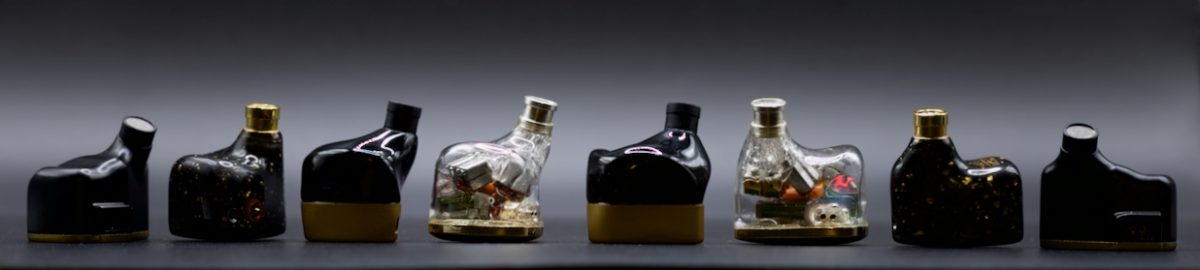

The Kinera Freya-Vanir is the latest evolution of Kinera’s Freya series, bringing the concept into a new generation with a more sophisticated five-driver hybrid architecture. While the original Freya established itself with a relatively straightforward 1DD + 3BA configuration, the Freya-Vanir adds a dedicated MEMS driver to the equation, alongside a refined four-way crossover.
MEMS drivers seem to be becoming somewhat of a trend lately, and after spending time with the Freya-Vanir, I can clearly see why.
As with many Kinera designs, the Freya-Vanir is not just about the hardware. The hand-painted faceplates give each set a distinctive appearance, while the included interchangeable 3.5mm/4.4mm cable makes it easy to pair the IEM with everything from conventional sources to balanced outputs.
On paper, the specification is certainly interesting, but specifications only tell part of the story. The real question is how this combination of dynamic, balanced-armature and MEMS technology translates into an actual listening experience.

Technical Specifications
- Driver configuration: 1DD + 3BA + 1MEMS
- Low-frequency driver: 8mm Liquid Dynamic Driver
- Mid / upper-mid drivers: 2 × Knowles Balanced Armature
- Treble driver: 1 × Custom Balanced Armature
- Ultra-high-frequency driver: Dedicated MEMS driver
- Crossover: Precision 4-way crossover
- Frequency response: 20Hz – 20kHz
- Impedance: 16Ω
- Sensitivity: 106 dB/Vrms @ 1kHz
- Connector: 0.78mm 2-pin
- Cable: Single-crystal copper + silver-plated single-crystal copper
- Cable construction: Coaxial, 4-strand braided
- Cable length: 1.25m
- Plugs: Interchangeable 3.5mm + 4.4mm
- Wearing style: Over-ear / in-ear
- Faceplate: Hand-painted Indigo-and-Gold Nebula
- Official price: $299
The Freya-Vanir therefore sits at an interesting intersection: a relatively compact and accessible IEM, but with an architecture that incorporates technologies normally associated with considerably more ambitious designs. The addition of the MEMS driver is particularly interesting and makes the Freya-Vanir a very compelling set to explore.
With the specifications out of the way, let’s get to the parts that matter most to me:
- the unboxing experience and first impressions
- how the Freya-Vanir actually sounds
- how it responds to different cables, and how it fits into my own collection and listening preferences.


First Impressions & Unboxing
When you open the box, the beautiful shells sitting on top are the first thing to catch your eye, and the packaging doesn’t disappoint either. It is relatively compact and follows the design language of Kinera’s higher-end releases from the past, such as the Loki Emerald.
The Loki was one of my first IEMs in the multi-kilobuck segment. It gave me a bit of a love-hate relationship with the hobby, but it also kept me exploring and helped me discover just how much the IEM market has to offer.

The Freya-Vanir comes with some stunning hand-painted shells, an impressive cable—especially considering the price—with interchangeable terminations, a generous accessory set with three sets of high-quality eartips, and a beautifully colourful puck-style case.
Where the Freya-Vanir Fits for Me
Before ending up with the Freya-Vanir, I’ve had a few recent experiences with IEMs in the more affordable price segment, and the Freya-Vanir is one of the sets that has pulled me further into this whole “discovery” phase.
Since nothing particularly “serious” had raised my interest lately, I thought I’d try some more affordable sets and stay up to date with what the hobby has to offer.
A small disclaimer: I still feel that premium pricing can bring audible benefits, and if I’m honest with myself, I don’t expect to change my mind about that anytime soon. I have to admit, nonetheless, that sub-$1K MSRP sets offer much better value, and lately they’ve also been among the more interesting releases.
My most recent experience in this segment was the Binary 1900, another banger for anyone looking for healthy, meaty bass in what is probably one of the better-tuned IEMs in this price range.
The Freya-Vanir takes things up a notch, though, and if I could keep only one of the two, I know which one I’d choose.
The packaging and cable are a few steps above the Binary’s, while the shells follow a very different design philosophy. Both are equally high quality, but very different indeed. The Freya-Vanir’s shell design reminds me of a Van Gogh painting, either way, it’s truly beautiful.
How Does It Sound?
My experience with comparable sets in this price range is fairly limited, but the Freya-Vanir immediately feels like a real step forward in sound quality compared with much of what I’ve heard in its class.
Technology evolves, and so does the IEM market. The MEMS driver implementation is one of the Freya-Vanir’s more interesting features, and the overall result certainly seems to work.
In broad terms, the Freya-Vanir has a slightly warm, clean and spacious presentation. Bass carries good weight and impressive sub-bass extension, vocals are slightly forward and articulate, while the treble prioritizes detail and texture without becoming aggressive.
Bass
The bass of the Freya-Vanir is meaty, with real weight and a physical quality to it. When the music demands it, it can really rumble and deliver a low end that hits hard. Bass decay is relatively fast, allowing the mid-bass to linger just long enough to provide body without creating congestion or covering the lower mids.
Although I love my mid-bass, the Freya-Vanir takes a slightly more sub-bass-focused approach, with very linear extension all the way into the lowest registers. And this isn’t just a “nice looking squig line”, the extension is genuinely audible and rewarding whenever the music reaches that deep.
The balance between mid-bass and sub-bass keeps the lows clean and controlled, which in turn helps the midrange remain clear and uncluttered. I’m not exactly a metalhead, but the combination of sub-bass extension, speed and control should make the Freya-Vanir an excellent choice for metal, especially with fast kick drums and complex passages where separation matters.
Midrange
Mids are slightly forward, with vocals sitting in a fairly intimate position within the stage. They are articulate and well textured, with a neutral timbre that gives the presentation a clear and precise character.
The one thing I’m still figuring out is the slight coldness. Despite the forward vocal presence, vocals don’t have quite the same warmth or “life” as something like the Quill Karma, or other warmer-tuned IEMs. That said, the Freya-Vanir still manages to capture the character and soul of the singer, perhaps with a slight preference toward male vocals.
Texture and spatial placement are probably the two highlights for me. Instruments and voices have a precise sense of position, while the controlled presentation keeps everything distinct without sounding artificially separated.
Treble
Highs are supposed to be the strength of a MEMS driver, right?
Before my first listen, I expected the Freya-Vanir to have an almost “earpiercingly” extended treble, pushing details right into your face. To my surprise, the treble is tuned slightly down, making it far less aggressive than I initially expected.
Yet, despite the restrained tuning, detail retrieval remains seriously impressive. Even without exaggerated extension, every little note seems to be there, with excellent micro-detail and a remarkable sense of texture.
The result is a treble that prioritizes resolution and information over sheer brilliance. It doesn’t constantly demand your attention, but when you listen for the finer details, the Freya-Vanir delivers them with impressive precision.
Coherence, Scaling & Soundstage
The Freya-Vanir is an impressively coherent IEM, with the crossover doing an excellent job of keeping the different drivers working together as one. It also scales surprisingly well at higher volumes, remaining controlled and composed rather than becoming aggressive.
It is quite responsive to source and cable changes, with a better cable bringing noticeable improvements in overall refinement, separation and spatial presentation.
A few cables i tried and liked:
- Audiohive Ulan 8w
- Eletech Fifth Ode
- Plussound Copper Fusion Hybrid 6w
Since all of the cables mentioned above are well beyond the price most Freya-Vanir owners would probably want to spend on a cable, and I would absolutely agree with that, my favourite pairing with the Freya-Vanir turned out to be the Audiohive Ulan 8W.
Despite its 8W configuration, the Ulan is surprisingly ergonomic, although there is naturally a little more heft to it.
Sonically, it brings a noticeable change to the Freya-Vanir. The presentation opens up, with improved separation, cleaner imaging and a little more weight and bass presence. Bass gains additional definition and control with an added physicality, while the treble picks up a touch more texture.
Imaging is another strong point. Instruments are precisely positioned across a wide and fairly tall stage, with width being particularly impressive. Depth is present but less obvious than width and height, creating a spacious presentation where music can often feel like it is coming from outside the head rather than directly from within it.
Quick comparison with Binary 1900
Sonically, the 1900 offers a full-bodied presentation with a healthy amount of fat, weighty bass, forward and engaging vocals, and a smooth treble that keeps the overall sound easy to listen to, even during higher-volume listening sessions, if one chooses to (not recommended, of course).
Overall, the 1900 offers a comfortable, high-quality (especially for the price) and full-sounding sonic experience with plenty of bass, engaging vocals, smooth treble and, perhaps unexpectedly, quite a bit of room to grow with the rest of the chain.
The Freya-Vanir takes a very similar tuning approach, but manages to improve upon some of the 1900’s sonic aspects, particularly stage, separation and bass quality. The 1900 is the more immediately engaging set, though. This engagement factor comes with a few caveats, in my opinion. The music can come across as more coherent and cohesive, but I suspect this is partly due to the slightly more intimate presentation and reduced separation compared to Kinera’s offering.
For my personal taste and with my current source, the Cayin N8iii, I would choose the Freya-Vanir over the 1900. Give me a more analytical source, however, and I could easily see my preference shifting in favor of the 1900.
There are no real winners or losers in this comparison. I’d say it is more of a “choose your own poison” type of situation, with each set offering a slightly different take on a fundamentally similar tuning philosophy.


Listening Impressions
Dream Theater – “Chosen”
Listening to Dream Theater’s “Chosen,” the first thing I notice is obviously not the bass, but the clarity of James LaBrie’s voice. It is presented with a certain grace—clean, articulate and with just the right amount of low-end foundation.
The treble extension, even when compared with something considerably more expensive like the Quill Karma, remains excellent, with nothing obviously missing. Overall, the Freya-Vanir has a smooth and gentle presentation that is easy to listen to.
As I mentioned the Karma, it is a step above the Freya-Vanir in some respects, but not in every aspect. Vocals on the Freya-Vanir emerge more clearly and are better separated from the rest of the stage, while the Karma is the more immediately impressive listen, with greater bass weight and a larger overall presentation.
On the Karma, vocals feel more integrated into the stage rather than being presented as prominently forward as they are on the Freya-Vanir.
Treble extension is comparable between the two, as is their ability to retrieve detail. Where the Karma pulls ahead is mainly in the overall weight and physicality of the presentation, while the Freya-Vanir counters with cleaner vocal focus and separation.
Postmodern Jukebox – “Lovefool” feat. Haley Reinhart
This track is a great example of how beautiful and engaging vocals can sound on the Freya-Vanir. I am missing a little bass foundation, but this is exactly why having more than one IEM makes sense.
Vocals are brought forward, while the stage narrows slightly, almost recreating the intimate setting in which the recording could have been made. There is something very natural about this presentation, with the voice becoming the clear focal point.
Switching to the FirAudio XE6 adds the bass layer I was missing—and then some, perhaps even more than necessary. This isn’t really a direct comparison, but rather a way of highlighting the different strengths each IEM brings to the table.
The clean and forward vocals of the Freya-Vanir are somewhat overshadowed by the XE6’s substantial mid-bass. The XE6 expands the stage in every direction, but in doing so loses some of the cleanliness and vocal focus that the Freya-Vanir handles so well.
Swing 41 – “Seul Ce Soir”
This is a great track for highlighting cymbals, instrument placement and the finer details in an arrangement. The Freya-Vanir does an excellent job here and feels almost perfectly suited to this type of music.
Instrument quality and separation are impressive, with each element occupying its own space without losing the cohesion of the performance. The subtle shimmer of the violin and delicate cymbal work are particularly enjoyable, showcasing the Freya-Vanir’s ability to reproduce texture and micro-detail without becoming overly bright or aggressive.
Final Thoughts
The Freya-Vanir has turned out to be one of those IEMs that surprised me more the longer I spent with it. Its specification is certainly interesting, but what matters more is how well the individual elements come together.
It doesn’t necessarily try to impress through sheer quantity or intensity. Instead, its strengths are in cleanliness, positioning, texture, controlled bass and surprisingly strong resolution. The sub-bass has real authority, vocals are clear and forward, and the treble manages to extract plenty of information without becoming aggressive.
There is a slight coolness to the midrange, and listeners looking for a warmer, more emotionally saturated vocal presentation may prefer something like the Binary 1900. Likewise, the Freya-Vanir doesn’t deliver the same sheer physicality and bass weight as something like the FirAudio XE6. But those differences also highlight what makes the Freya-Vanir special.
For me, the most impressive aspect is how coherent the whole presentation feels. The wide stage, precise positioning, excellent separation and controlled low end come together into an IEM that is easy to listen to but still rewards focused listening.
Considering the $299 price point, the Freya-Vanir is a very interesting example of how quickly technology and tuning are progressing in the sub-$1K IEM market. The MEMS implementation certainly makes it interesting on paper, but it is the way Kinera has put everything together that makes it worth listening to.