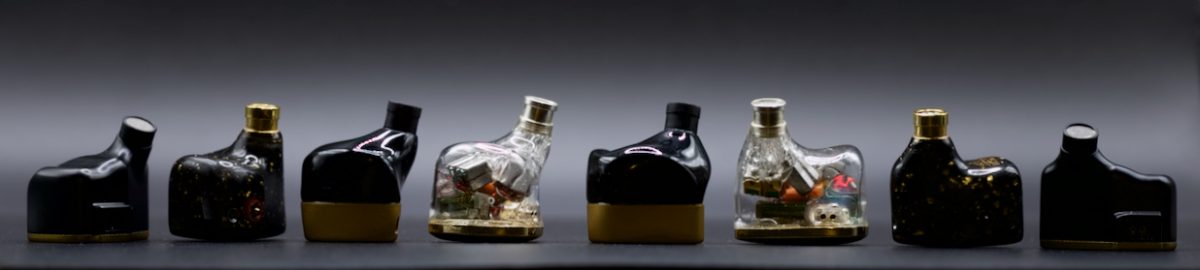

The Miracle One is the new single DD from Aful. The official figures are as follows:
This sample was received from HiFiGo in return for a review. There were no conditions imposed.
Specially-Developed High-Performance 6mm Wide-Frequency Dynamic Driver.
- Innovative Liquid Silicone Rubber(LSR) Diaphragm.
- Advanced SEM(Sound, Electricity, and Math) System-Level Acoustic Design.
- Dual-Resonant Acoustic Chamber Architecture.
- Front Stepped Acoustic Path for Extended, Smooth Treble.
- Precisely Designed Acoustic Chamber with Precision Rear Chamber, and Resonance Tubes.
- Exceptional Phase Tolerace and Natural Timbre.
- Warm, Full-Bodied Sound.
- Ultra-Compact Shell Design.
- Transparent Cavities.
- Available in 3.5mm and 4.4mm Termination Options.

The IEM features an ultra-compact, one-piece transparent resin housing. This clear cavity design allows the sophisticated internal acoustic structure to serve as the visual focal point of the earpiece.


I have to admit, I quite like the design, reminding me a bit of the DIta Project-M (original). Clear shells with a coiled duct inside (the pigtail, as I affectionately call it). They hardly weight anything and they are supremely comfortable.
Sound
With a 6mm DD, M1 is clearly not a bass head IEM. Neither is it lacking in this department. The sub bass has a mild roll-off and it is present in an amount that will satisfy most people. The damped rear acoustic path, that prevents standing waves, is favoring rapid decay over resonant warmth, thus making them a good match for metal, but less visceral for chest-thumping electronic. The level of detail is good, but not stellar. I can follow the bass guitar line, but it does take some focusing in order to do so. Articulation is average, pretty much to be expected from a single DD of this size. The focus in the lower end is on clarity and if this is what you’re after, it is well done. No matter what blackened death metal I threw at them, the bass drum notes remained distinct and controlled. The addition of an amp adds a bit more oomph, while maintaining the control and speed. I would have liked more spatial expansion, more glue to hold the pieces in place, as towards the edges of the stage the bass is rather thin, and gives the impression something is missing. The mid-bass is punchy and articulate in transient speed, but lean in acoustic decay and volumetric weight. It hits fast, but doesn’t linger to fill the whole of the stage.
Interestingly enough, music with lots of sub bass sounds better than expected. That little driver packs quite a punch, but it needs to be served the right material.
Lower mids have good grit/texture, making them pretty good for metal. Again, a small bump in the mid bass, followed by a slightly elevated lower mids, would have worked even better for me, but they had to draw the line somewhere. I find the mids details better than average, undoubtedly an effect of the nimble, surgical bass. Not the most heavy notes, but pretty respectable.
Where they shine is the vocals. Both male and female are portrayed at good distance, not too close to feel like the stage is claustrophobic, but not too far away, which is a good choice, since the sound density would have made the stage hollow. There is good separation of the vocals from the background music, with coherent spatial arrangement, so at no point does the band overlap with the vocals. But the best thing is the voice sound in itself. M1 focuses more on a tonally natural and free from upper-mid peakiness (smooth pinna gain) sound, the result being a rendition that elevates most artists by comparison with similarly priced IEMs. The timbre is accurate, with maybe a slight twist in the upper registers.
Sibilance is very well controlled, hardly ever being an issue.
Treble can be characterized as mostly smooth with above average note weight. The energy is well maintained, there are no grating peaks, nor do they feel like they lack anything. The cymbals have good body, in fact quite surprising, in view of the rest of the spectrum. The placement of cymbals also is impressive, for a single DD it manages to convey them at different spots in the stage. Commendable. They deliver crisp, fast transients, with a cutting edge, helped by the low mechanical inertia of the small 6mm diaphragm. Out of the box, the treble felt overly damped and closed-in, but once opened up (around 100h burn-in), it sounded more natural, while maintaining an overall smoothness. Only tracks with high-frequency compression managed to create momentary splashiness, but 99% of the time, M1 was one of the easiest to listen IEMs.
Stage is a mixed bag for me, having decent width and height, but not quite enough depth. Not and outside your head experience by any means, but in combination with their sound density it works really well. Stage depth is higher in the center, but it is thinning out towards the extremities. Imaging is precise, with instrument separation above average, and certainly above similar single DDs IEMs. As the volume goes up, the air between instruments extends and the stage is blooming.

Pairing
There are two factors that need to be mentioned:
- They needed a lot of burn-in to sound good. Luckily, I had a DAP to burn-in, so I have coupled them together. The most noticeable effect was the highs, that were really muffled in the beginning but did open up after 100+ hours (I only checked on them from time to time during this period, but it is still possible that some of the effect is brain burn-in.
- They need loads of power to shine. These are not low volume bloomers, quite the opposite. In order to be able to pump up the volume and not end up in a sonic mess, they require heaps of clean power. It is indeed rather easy to push them into distortion, which must be an effect of the small driver size.
It is best to pair them with a warm, powerful source, something like the Apos Gremlin, or the M3 Ultra dongle. Turning to DAPs, unsurprisingly, the Fiio M25 R2R has more than enough grunt for M1, pushing them into a higher echelon (but see the mention at the end). The sound was particularly pleasant, fuller and more bassy, but more importantly, with a tad more lower mids body than, for example, the Fiio JM21.


Cables
The stock cable is very nice, of better quality than Alba’s (which is, anyway, an upgrade cable I received with it at the time). Similar to EP321’s stock cable, M1’s is a piece of gear I wouldn’t have any problems using with other IEMs.
Hansound Nyx has brought what I was missing, some emphasis of mid bass, with a more extended lower end, a touch of warmth and slight plus to engagement. It brings everything upfront, making the music sound perilously close. The voices are maintained detached from the background, luckily.
Of course, many other options are possible, but to my knowledge, none of the cables lifts the mid bass while preserving the rest, so the best bet remains find a source that does that, like those described above.

On the subject of tips, Aful provides three types, and personally I have settled for the grey-blue ones. In addition, fat (large) tips, like Baroque, and tips with a long bore are also good. There are no particular problems, so everybody will be able to easily find something that works, the shells being so forgiving.
Comparisons
Meze Alba
Alba sounds a bit larger and has a more relaxed bass, but one that provides more filling for the stage. In terms of mid to sub bass balance, they are very similar, the main difference being given by the faster transients in the M1. Alba is more lush, less precise. In lower mids, M1 has a slight advantage thanks to more texture, somehow mimicking stage depth. Alba’s midrange presents an uncolored character paired with a hint of warmth, capturing masculine voices with respectable body and crisp definition. Female voices can occasionally be pushed a little bit too far. M1, on the other hand, is offering a rich, full-bodied, and intimate vocal realism that avoids any harshness. The Alba presents female vocals with more vibrancy and top-end life, whereas the Miracle One leans into a smoother, darker refinement that trades that vividness for ultimate tonal safety.
Alba has more splashy treble, with some cymbals being close to my comfort limit. Overall, it is brighter than M1.
Binary Acoustics EP321
Included as the price is now close to M1. This is a hybrid setup, using MEMs as treble drivers. It is a very neutral IEM, with little sub bass and nicely detailed mid bass, a Harman-ish tuning with elevated lower mids. It has a narrower stage, less precise instrument separation and somehow unegaging vocals (mostly due to the lack of colouration and safe playing). It is very good for acoustic music, jazz, but it can easily become congested with complex passages. M1 is less full sounding, more textured in the mids, but less treble-detailed and airy than EP321.
Meze Advar
Out of curiosity, does a 3x price increase bring more quality? In this case, yes! More fullness, a more organic, warmer, bass, more definition in the mid bass and lower mids deliciously elevated. Advar is some years older and the difference is obvious in the details, an exponent of a past generation. However, once the lower resolution is established, the tuning is more satisfying. Some well known characteristics of Advar are the rogue peaks in the treble, as well as a healthy note of sibilance. Notes have more weight throughout the spectrum, making for a very satisfying listening experience. If you can tolerate the treble, that is. Better stage depth too, making music more credible, more similar to speakers, rather than all coming from two small points in your ears.

Songs
Get Lucky – Daft Punk
M1 has nice balance, with all elements remaining of equal importance throughout the song. Of particular interest here are the cymbals, remaining sparkly and clear, while the bass has good articulation. The sub bass is more than respectable, it is almost hard to recognize the same IEM that is so subdued with metal. Still lacking that last bit of travel, the expansion of the bass into the far edges of the stage. Very spacious stage, with nice spatial effects.
Alba is my favourite here, with a large stage, a more “lazy bass” – slower transients and a more relaxed decay, the lower mids slightly uplifted, bringing it closer to a W shape and a better stage filling. The imaging is slightly inferior to Miracle One. That’s not to say it is without faults, certain peaks in the treble are very intense. I can certainly imagine said peaks being grating for some people. For me, they are part of the fun.
EP321 brings everything closer, with the voice being a touch less engaging than M1. The treble response is in another league, with a real sense of depth to the notes, while the mid bass is more elevated and along with the lower mids for a better matrix bounding together the separate sounds. The stage is taller and narrower than M1’s.

Finally free – Lisa Simone
Miracle one plays mostly safe, the voice being close, forceful, yet never grating. The bass has enough presence and the treble does its support job admirably. The voice sounds to me naked of any coloration, pure and engaging.
Meze Alba has the most energetic voice, forward, loud and proud. A touch of thinness can be heard here and there, but that is not unusual at this price range. Some notes are lightly piercing, but that’s the price of freedom, I guess.
Ep321 in general suffers from a lack of engagement when it comes to voices, but in this case it is not so obvious. Very nice bass guitar articulation, the most textured treble and a safe voice, slightly pushed back comparative with the other two. The voice is smoother, less textured, which is not necessarily a bad thing, as it makes for a more comfortable listening experience.
No gods, no masters – Machine Head
Miracle one shines here. The quick impact of the bass, the fast decay, gritty mids and energetic treble, all fit the song to a pulp. The only complaint, a clear sensation of V shaped tuning, with some elevation lacking in lower mids. The treble is, at times, too intense.
Alba takes the treble up one notch, it is not for the faint of heart. There is a clear advantage in the low mids and mid bass, albeit a small one. Some of the grit is shifted towards upper mids, so those frequencies appear more prominent.
A bit claustrophobic for EP321, this song needs a bit more stage to shine. In the absence thereof, EP321 sounds congested and tad crowded. It is not all bad, though, the bass is well articulated, the treble is good and the double bass drumming is very precise and controlled.
Conclusions
This turned out to be a surprising IEM. From being a bit disappointed by its treble in the beginning, to getting to like it for that exact same feature, is a long way. It grew on me when connected to high-power sources, especially when adding a bit of bass (mid bass) not necessarily in order to have a booming bass, but for achieving better stage filling and sound density throughout the stage. M1 easily takes a couple of dB of EQ-ing, leaving quite a bit of margin still. Having tried both impedance adapters and EQ-ing, I can safely say the impedance adapters are not the way to go.
It plays most genres without any particular issues, it is very easy to listen to and extremely comfortable, one of the few IEMs I can sleep on (yes, literally sleep on a side, with them in my ears).
They have just one problem: the competition. Meze Alba is equally good, albeit with a less impressive package, and it costs significantly less. While M1 is going for 179 Eur, Alba sells for 110-129 Eur. Is the price difference justified by the extra tips? I’m not sure. Furthermore, for a bit more money, the Binary Acoustics 1900 is a more complete IEM, the only things in favour of M1 remaining the sound coherence and higher comfort.
In this competitive market, the Miracle One is a good product, but for the time being a little bit overpriced.
